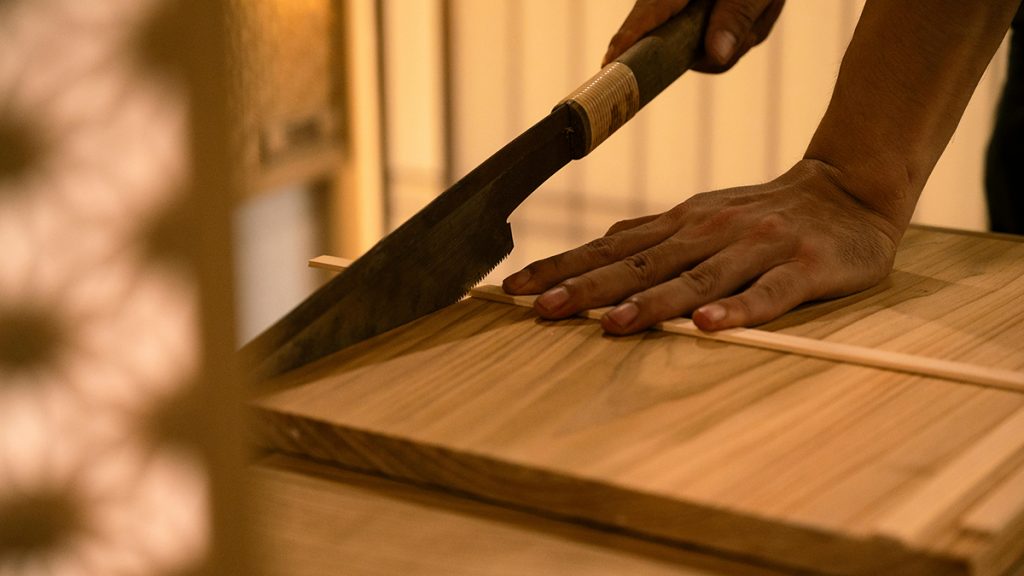
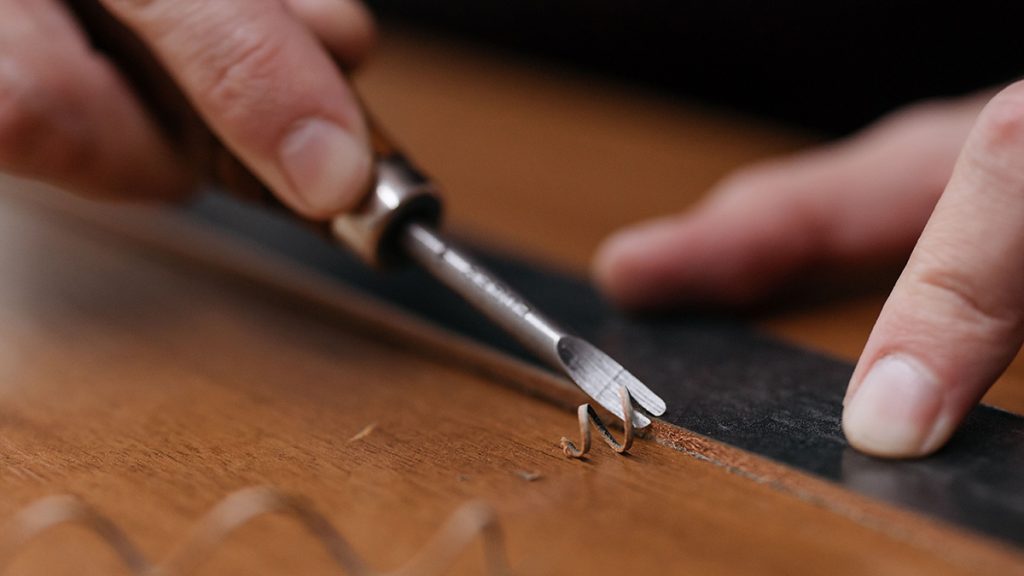
Ask any seasoned woodworker what their secret weapon is for achieving a flawless, mirror-smooth finish on highly figured wood, and they won’t tell you about a high-tech orbital sander or a premium sandpaper grit. They will tell you about a simple sheet of hardened steel: the scraper.
Whether you use a flexible rectangular card scraper or a hand-plane-style cabinet scraper, these traditional tools do what sandpaper cannot—they slice away microscopic wood fibers rather than scratching them down. Sandpaper leaves behind fine dust that chokes and muddies the natural wood grain. A perfectly burnished scraper, however, creates gossamer-thin wood curls, leaving a surface so crisp that the chatoyance (the natural optical depth and shimmer of the timber) completely pops.
If you want to master the art of tear-out-free surfaces on unruly woods like curly maple, burl, or interlocked tropical grains, here is a guide to the best scraping tools for your workshop.
The Top 5 Cabinet and Card Scrapers Reviewed
When shopping for scraping tools, you will encounter two main profiles: manual card scrapers (which rely purely on your finger pressure and flexibility) and cabinet scrapers (which house the steel blade inside a mechanical body to prevent finger fatigue and maintain a fixed cutting angle).
1. Bahco 474 Premium Card Scraper
Widely recognized as the absolute industry standard card scraper for intermediate and professional woodworkers alike.
-
Tool Type: Traditional Card Scraper
-
Steel Metrics: High-grade cold-rolled Swedish steel
-
The Highlights: The Bahco 474 is a masterclass in metallurgy. The steel is engineered with the perfect balance of hardness and flexibility. If a scraper is too hard, it is impossible to roll a hook (burnish a cutting burr) onto the edge; if it is too soft, the edge collapses within two minutes of work. Bahco gets it exactly right. It holds its rolled burr remarkably well even when tackling dense, abrasive exotic hardwoods.
-
Best For: All-purpose surface preparation, cleaning up dried glue lines, and flattening out uneven panel joints.
2. Veritas Cabinet Scraper (No. 80 Style)
The ultimate mechanical scraper choice for flattening large furniture surfaces without burning your thumbs or losing your cutting angle.
-
Tool Type: Handheld Cabinet Scraper Body
-
Steel Metrics: Cast-iron body with a high-carbon steel blade ($2-3/4^{\prime\prime}$ wide)
-
The Highlights: Based on the classic Stanley No. 80 design, Veritas has elevated this tool to perfection. Holding a bare card scraper requires you to constantly flex the steel with your thumbs, which generates friction heat and hand cramps. The Veritas body holds the blade securely for you. It features a central thumb screw that flexes the blade mechanically, letting you dial in the depth of the cut down to a microscopic tier with zero hand strain.
-
Best For: Flattening large table tops, chest lids, and high-volume smoothing jobs where hand fatigue is a major factor.
3. Two Cherries 4800 Kirschen Card Scraper Set
A premium German-made multi-profile scraper kit designed to handle complex curved mouldings, rounded profiles, and concave furniture recesses.
-
Tool Type: Multi-Profile Card Scraper Set (3 Pieces)
-
Steel Metrics: Polished German carbon steel
-
The Highlights: Woodworking isn’t always flat. If you need to smooth out a concave bowl recess, a rounded chair seat scoop, or an architectural crown moulding profile, a rectangular card scraper is useless. This German-engineered set includes a standard rectangular card, a classic gooseneck scraper (for irregular internal sweeps), and a double-radius concave/convex scraper.
-
Best For: Instrument makers (luthier work), chair makers, wood turners, and restorative furniture artisans.
4. Lie-Nielsen No. 143 Tooth Cabinet Scraper
A specialized, ultra-premium boutique tool engineered for aggressive stock prep, veneering foundations, and taming the most chaotic grain patterns on earth.
-
Tool Type: Heavy-Duty Handheld Cabinet Scraper
-
Steel Metrics: Ductile iron casting with a thick, high-carbon blade
-
The Highlights: Lie-Nielsen is famous for tool heirloom quality. The No. 143 handles problematic grain by acting as a hybrid between a hand plane and a scraper. It can accept standard smooth scraping blades or specialized toothing blades (which have tiny serrated teeth along the edge). The toothed edge scores cross-grained timbers cleanly, preparing the surface perfectly for structural veneer gluing without causing massive, deep tear-outs.
-
Best For: High-end furniture makers working with premium raw shop-made veneers and wild crotch grain configurations.
5. Crown Tools 376 Cabinet Scraper Burnisher
While not a scraper itself, a scraper is completely useless without a burnisher to prep its edge. This tool is the mandatory companion to any card scraper.
-
Tool Type: Scraper Edge Burnishing Rod
-
Steel Metrics: High-polished, ultra-hardened round steel rod ($6^{\prime\prime}$ length)
-
The Highlights: To make a scraper cut, you must physically draw and roll the steel edge into a razor-sharp hook. This requires a rod that is significantly harder than the scraper steel itself. Crown Tools pairs a highly polished, high-carbon rod with an ergonomic wooden handle, allowing you to rub the scraper edges smoothly without galling or scratching the steel.
-
Best For: Every woodworker who owns a card scraper and needs to maintain a razor-sharp cutting burr.
Scraper Tool Style Comparison Matrix
| Model | Tool Category | Primary Mechanism | Cutting Width | Best Surface Target |
| Bahco 474 | Manual Card | Pure Finger Flexing | 6 inches | General flat panels & glue cleanup |
| Veritas No. 80 | Cabinet Scraper | Thumbscrew Flex Control | 2-3/4 inches | Medium to large dining table tops |
| Two Cherries Set | Shaped Profile | Manual Finger Control | Varied Shapes | Concave bowls, chair scoops, mouldings |
| Lie-Nielsen 143 | Heavy Cabinet | Fixed Cast-Iron Sole | 2 inches | Wild crotch grain & veneer prep |
| Crown 376 | Burnishing Rod | Manual Edge Drawing | N/A (Accessory) | Essential maintenance for all edges |
Step-by-Step Tuning: How to Roll a Perfect Hook
A card scraper doesn’t arrive out of the box ready to cut wood curls. It arrives with a raw, square edge. If you just drag it across a board, it will only produce fine, useless dust. You must tune the edge to create a microscopic cutting hook. Follow this precise metal-working sequence to dial in your scraper:
3 Vital Rules for Mastering the Scraper in the Shop
-
Master the Push vs. Pull Mechanics: When using a bare card scraper, tilt the top of the card forward at roughly a 75-degree angle in the direction of travel. Press your thumbs into the center of the card to bow it slightly into a shallow curve. Push the tool firmly away from your body. Bowing the card prevents the sharp outer corners from digging into your flat workpiece panel, ensuring only the clean middle center section slices the wood. If your thumbs get hot from the friction, you can reverse your grip and pull the card toward you instead.
-
Watch the Heat Build-Up: Slicing dense woods with a scraper generates an incredible amount of localized friction heat. Within a couple of minutes of intense work, the steel card can become hot enough to blister your bare skin. To protect your thumbs without losing your tactile tool feedback, stick a piece of thick blue painters tape or a magnetic wooden pad directly onto the back face of the card where your thumbs rest.
-
Know When to re-Burnish vs. re-File: A rolled scraper hook eventually rolls completely flat or dulls out under heavy use. However, you do not need to repeat the messy filing stage every time it stops producing curls. You can usually refresh a tired hook 3 to 4 times simply by rubbing your oiled burnisher along the face and edge to push the steel back into shape. Only return to the metal file when the edge becomes physically nicked or structurally worn out.
Amazon Disclaimer:
As an Amazon Associate, I earn from qualifying purchases. This means that if you click on certain links within this post and make a purchase, I may receive a small commission at no additional cost to you. This helps support the site and allows us to continue creating high-quality DIY content.