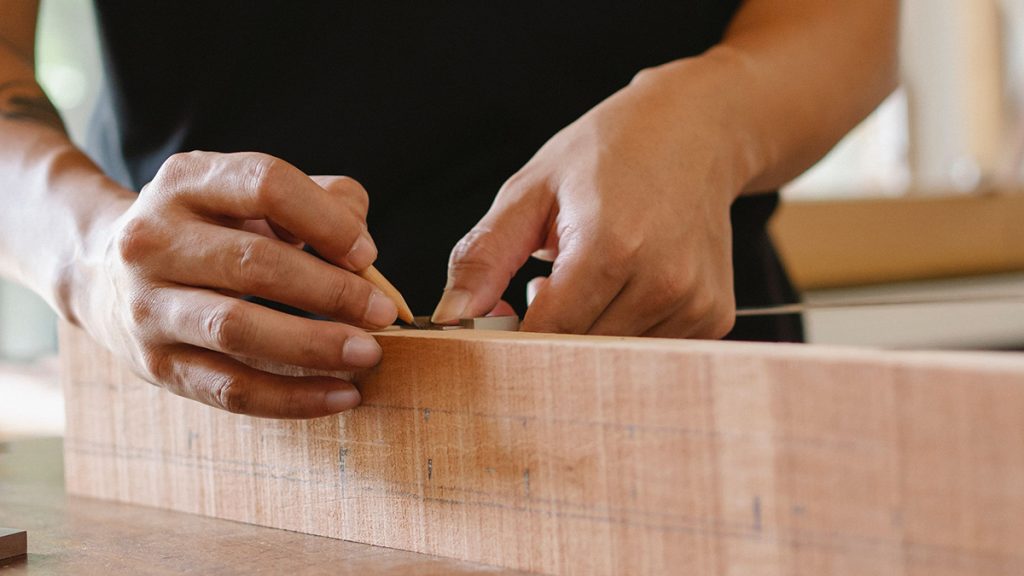
Whether you are prepping a square blanks layout for the wood lathe, aligning a metal cylinder in a drill press, or trying to find the exact middle of a round tabletop for a pedestal mount, finding the absolute center of your stock is a critical first step. Guessing or using a standard ruler to eyeball the midpoint is a recipe for disaster—resulting in wobbly turning blanks, off-center holes, and ruined projects.
Marking the center on square stock is relatively straightforward if the corners are perfectly crisp, but when dealing with out-of-round logs, irregular bowls, or polished metal cylinders, standard geometry rules become a nightmare to calculate by hand.
To eliminate guesswork and save valuable layout time, you need a dedicated center finder tool. Here is a review of the top 5 center finders engineered to deliver dead-accurate midpoints on both round and square material.
The Top 5 Center Finders Reviewed
When choosing a center-finding tool, look for rigid materials like machined aluminum or thick acrylic that won’t flex under your pencil or scribe, along with clear, easy-to-read layout lines.
1. Woodpeckers Ultra-Gage Center Finder
The absolute gold standard for high-precision woodworkers and tool enthusiasts who demand zero-tolerance layout accuracy.
-
Tool Type: Machined 90-degree V-style center finder
-
Material: Aircraft-grade anodized aluminum
-
The Highlights: Woodpeckers is legendary for its distinct red layout tools, and this center finder is a masterpiece. Machined from a solid block of aircraft-grade aluminum on state-of-the-art CNC mills, its 90-degree inner jaw seats perfectly against square or round stock up to 8 inches in diameter. The guide edge is micro-beveled, allowing your mechanical pencil or marking knife to glide directly against the true center line with zero deflection.
-
Best For: Professional furniture makers and precision woodworkers who require perfect structural layouts.
2. Starrett 11H-12-4R 12-Inch Combination Square with Center Head
An industrial-grade, American-made machinist classic that brings unparalleled precision to both metal fabrication and heavy woodwork.
-
Tool Type: Combination Square with a dedicated Center Head attachment
-
Material: Hardened steel blade with a cast-iron center head
-
The Highlights: If you work with both wood and metal, Starrett is the ultimate investment. By sliding the heavy cast-iron center head onto the precision-ground 12-inch steel ruler, you turn your combination square into a heavy-duty center finder. The rule features photo-engraved graduations that never wear off. Because it is built from hardened steel, it can easily handle the sharp steel scribes used in metalworking without getting scratched.
-
Best For: Professional machinists, welders, and advanced woodworkers who want an heirloom tool that performs multiple shop functions.
3. WoodRiver Round Center Finder
An incredibly popular, budget-friendly clear acrylic gauge designed specifically for woodturners working with irregular bowl blanks and logs.
-
Tool Type: Transparent conical ring center finder
-
Material: Heavy-duty clear acrylic
-
The Highlights: This tool is a lifesaver when dealing with raw wood logs or uneven turning blanks where the edges aren’t perfectly straight. It features a series of concentric circular rings printed directly onto a clear plastic disc. You simply place the transparent sheet over the end of your log, align the wood grain with the matching circular ring template, and poke a marking awl through the center hole.
-
Best For: Wood lathe turners and bowl makers trying to get the maximum yield out of irregular timber blanks.
4. iGaging Center Finder & Depth Gauge
A highly innovative 2-in-1 layout tool that combines center-finding capabilities with a built-in step-depth ruler.
-
Tool Type: Multi-functional layout blade
-
Material: Hardened stainless steel
-
The Highlights: The iGaging center finder features a unique geometric profile. One side acts as a standard 90-degree centering square for small to medium shafts. The reverse side features a specialized rule that allows you to read center offsets instantly without doing any mental math. The stainless steel body is satin-finished, which cuts down on glaring workshop light reflections and makes the etched numbers incredibly easy to read.
-
Best For: Maintenance mechanics and DIY hobbyists who frequently layout small metal rods or dowel pins.
5. Taytools 100021 Brass Center Finding Marking Gauge
A traditional woodworker’s dream tool designed specifically for scribing perfect center lines down the long edges of flat board stock.
-
Tool Type: Self-centering edge marker
-
Material: Solid brass body with steel guide pins
-
The Highlights: While V-shaped center finders excel at finding the middle on the end of a block, the Taytools gauge is built to find the center along the length of a board (ideal for mortise and tenon joinery). It features two steel pilot pins that straddle your lumber. As you twist the solid brass body, the central marking hole is mechanically forced into the exact dead center of the board width, regardless of whether the timber is 1/2-inch or 2 inches thick.
-
Best For: Cabinet makers laying out traditional mortise and tenon joinery joints on lumber stock.
Center Finder Style Comparison Matrix
| Model | Primary Material | Max Stock Capacity | Best Stock Target | Key Advantage |
| Woodpeckers Ultra-Gage | Anodized Aluminum | 8 inches | Square & Round blanks | CNC-machined accuracy; zero flex |
| Starrett 11H-12-4R | Cast Iron / Steel | 12 inches | Metal shafts & cylinders | Industrial durability; works with steel scribes |
| WoodRiver Ring Finder | Clear Acrylic | 10 inches | Irregular logs & bowls | Concentric circles easily map rough edges |
| iGaging Pocket Gauge | Stainless Steel | 4 inches | Small rods and dowels | Compact pocket size; built-in depth scale |
| Taytools Brass Gauge | Solid Brass | 2-1/2 inches (Width) | Long board edge profiles | Self-centering design for perfect joinery |
Step-by-Step Layout: The 4-Line Center Verification Sequence
Even with a premium tool, wood and metal stock can be slightly out-of-round or imperfectly square. To guarantee absolute mathematical accuracy, never rely on a single layout line. Follow this strict geometric checking sequence to find the true center every single time:
3 Vital Rules for Dead-Accurate Center Finding
-
Account for Pencil Lead Thickness: A common mistake is using a standard wooden pencil with a dull, blunt lead tip. A thick pencil line can easily introduce a 1/32-inch layout error. When using a center finder, always use a 0.5mm mechanical pencil or a dedicated woodworker’s marking knife. Keep the blade or lead pressed tight up against the metal fence of the gauge to prevent layout drift.
-
Always Center Punch the Intersection: Once you have marked your lines and verified the center point, never try to jump straight into drilling. A drill bit or a lathe live center will naturally skate and drift across a flat surface, ignoring your lines. Take a sharp automatic center punch, place the tip exactly on your line intersection, and click it to leave a deep mechanical dimple. This dimple captures the point of your drill bit, guiding it home perfectly.
-
Choose the Right Tool for Irregular Stock: If you are dealing with a raw log that still has bark on it, a metal 90-degree V-square center finder will fail because the rough bark will lift the tool’s arms unevenly. For raw timber or natural-edge projects, always drop the mechanical squares and use a transparent template style center finder (like the WoodRiver). Mapping the stock visually via concentric rings completely bypasses the surface texture irregularities.
Amazon Disclaimer:
As an Amazon Associate, I earn from qualifying purchases. This means that if you click on certain links within this post and make a purchase, I may receive a small commission at no additional cost to you. This helps support the site and allows us to continue creating high-quality DIY content.