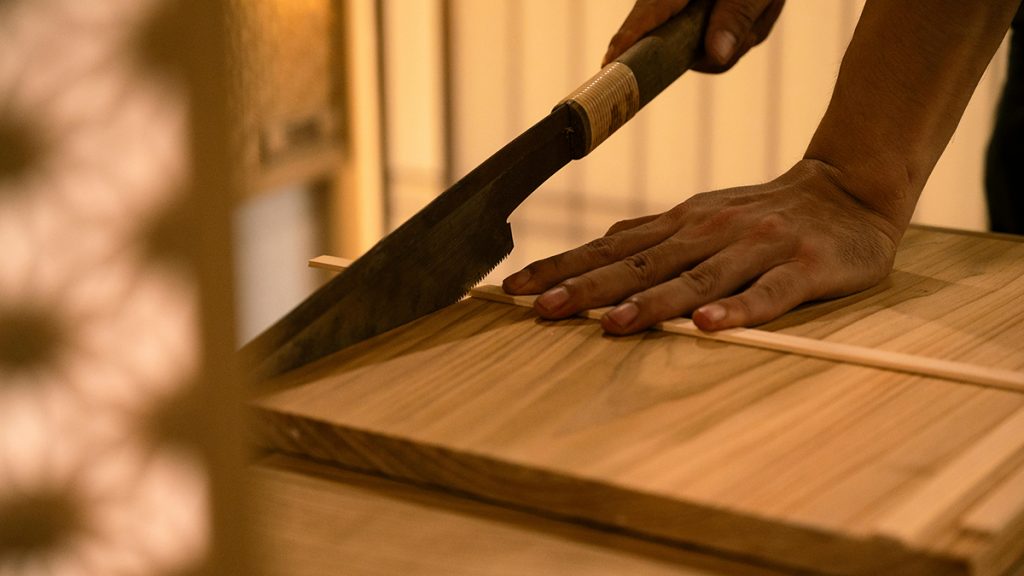
In fine woodworking, the difference between a good joint and a perfect joint is often the thickness of the saw blade. Traditional Western saws require a thick blade to prevent buckling during the push stroke. In contrast, the Japanese Ryoba cuts on the pull stroke, allowing for a blade as thin as $0.5$ mm.
Whether you are cutting tenon shoulders or dimensioning exotic hardwoods, the Ryoba is your “all-in-one” solution. In 2026, impulse-hardened teeth have become the standard, ensuring these saws stay sharp $5\times$ longer than traditional steel. Here are the top 5 Ryoba saws on Amazon for achieving gap-free joinery.
Ryoba Saw Comparison Table
| Model | Blade Length | TPI (Cross/Rip) | Blade Thickness | Key Feature |
| Suizan Professional | 9.5-Inch | 15 / 9 | 0.5 mm | Best Overall Value |
| Gyokucho Razorsaw 770-3600 | 9.5-Inch | 17 / 14 | 0.5 mm | Best for Hardwood |
| Z-Saw Ryoba 250 | 10-Inch | 18 / 15 | 0.5 mm | Most Durable Teeth |
| Suizan 180mm (Mini) | 7-Inch | 22 / 12 | 0.45 mm | Best for Detail Work |
| Kakuri Japanese Pull Saw | 9.5-Inch | 14 / 9 | 0.6 mm | Best for Beginners |
1. The Industry Standard: Suizan Professional Ryoba
Suizan is the go-to brand for modern woodworkers. Their model is perfectly balanced for everything from furniture building to general shop tasks.
Why it’s perfect for woodworkers:
The crosscut side features triple-ground teeth that slice through Oak and Cherry fibers like a scalpel. The rip-cut side has a graduated tooth pitch (finer near the handle), making it much easier to start a cut without the saw jumping.
-
Pros: Replaceable blades, long rattan-wrapped handle for two-handed control, very affordable.
-
Cons: The thin blade is fragile; a twist mid-stroke can bend it.
2. The Precision Master: Gyokucho Razorsaw 770-3600
Gyokucho is famous for its “Razorsaw” technology. This model features some of the hardest steel in the industry, specifically designed for dense materials.
Why it’s essential:
If you work with Hard Maple or Exotic Woods, you need teeth that won’t dull. The 770-3600 has a slightly higher TPI (teeth per inch) on the crosscut side, which results in a finish so smooth it rarely needs sanding.
-
Pros: Hardest teeth on the market, exceptional for fine joinery, very rigid for a thin saw.
-
Cons: The handle is plastic/rubber rather than traditional rattan (less “vintage” feel).
3. The Professional Workhorse: Z-Saw Ryoba 250
Z-Saw is a favorite in Japanese carpentry. Their Ryoba 250 is designed for heavy daily use while maintaining tight tolerances.
Why it’s perfect for woodworkers:
The teeth are impulse-hardened to a level that makes them nearly impossible to file—but they stay sharp for years. It excels at large-scale joinery like timber framing or building heavy workbenches.
-
Pros: Extremely long-lasting teeth, easy blade change mechanism, great for deep cuts.
-
Cons: The kerf is slightly wider than the Suizan, making it less ideal for micro-details.
4. Best for Small Details: Suizan 180mm Mini Ryoba
Not every cut needs a full-sized saw. For jewelry boxes, small dovetails, or thin trim work, the 180mm Mini is a game-changer.
Why it’s essential:
The shorter blade gives you incredible control for one-handed operation. With 22 TPI on the crosscut side, it leaves a hairline-thin mark. It’s the perfect companion to a Dozuki (backsaw) when you need to cut deeper than the Dozuki’s spine allows.
-
Pros: Very lightweight, ultra-fine cuts, fits in a standard tool bag.
-
Cons: Not suitable for boards thicker than 1 inch.
5. Best for Beginners: Kakuri Japanese Pull Saw
If you are transitioning from Western saws, the Kakuri offers a slightly thicker blade ($0.6$ mm) that is more forgiving of “pushing” mistakes.
Why it’s perfect for woodworkers:
Kakuri uses a high-carbon steel that is slightly more flexible and less brittle than professional Suizan or Gyokucho models. It’s an excellent “learning saw” for practicing your pull-stroke technique without the fear of snapping a blade.
-
Pros: More durable blade, ergonomic handle, great price-to-performance ratio.
-
Cons: The cut is not as clean as the higher TPI models.
3 Rules for Mastering the Pull Saw
-
Let the Saw Do the Work: This is the #1 rule. Unlike Western saws, you do not need to apply downward pressure. Gravity and the pull motion provide all the force needed. If you press hard, the thin blade will bow.
-
Start with Your Thumb: Use the nail of your thumb as a guide. Place the saw on the far side of your marking line and pull back lightly 2–3 times to establish a “track” for the blade.
-
The Two-Handed Grip: For long or deep cuts, use two hands on the long handle. Space them about 4 inches apart. This stabilizes the saw and ensures the cut stays perfectly plumb.
Final Verdict
-
For the best all-around furniture making, buy the Suizan.
-
For working with extremely hard or dense wood, the Gyokucho Razorsaw is the winner.
-
For small projects and delicate joints, the Suizan 180mm Mini is indispensable.
Read too: Best Woodworking Chisel Sets: From Budget to Pro
Disclaimer: As an Amazon Associate, I earn from qualifying purchases. Drink clean, hike on!