In a world of cordless drills and pneumatic nailers, the humble hammer still holds a place of honor on the workbench. However, woodworking requires a much more delicate touch than general construction. If you hit a fine cherry wood cabinet with a steel-faced framing hammer, you’ll leave a permanent “scab” in the grain.
To build high-quality furniture, you need a collection of striking tools designed to provide force without destruction. Here are the top 5 hammers and mallets every woodworker should have in their tool chest.
The Striking Toolkit Comparison
| Tool Type | Primary Use | Face Material | Why You Need It |
| Joiner’s Mallet | Chisel work / Assembly | Wood (Hardwood) | Protects chisel handles |
| Dead Blow Hammer | Seating joints | Polyurethane / Shot-filled | No bounce-back force |
| Dead Blow Mallet | Fine furniture assembly | Nylon / Brass | Precision persuasion |
| Warrington Hammer | Small nails / Brads | Steel | Slim “peen” for tiny nails |
| Rubber Mallet | General shop use | Rubber | Soft, non-marring impact |
1. The Classic Joiner’s Mallet: Iskysoft Wood Mallet
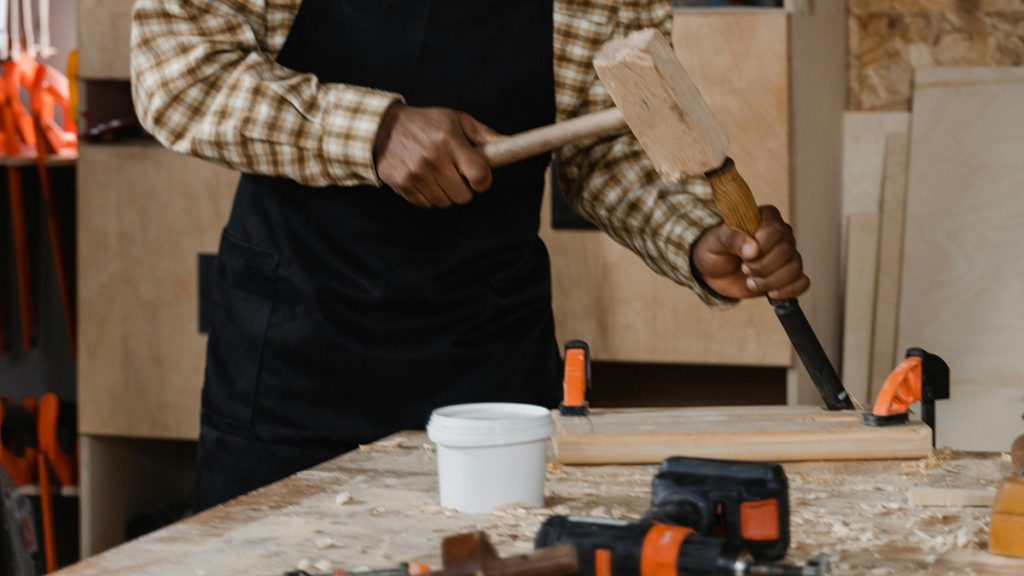
A traditional wooden mallet is the soul of a woodworking shop. Unlike steel, wood-on-wood contact absorbs some of the vibration, giving you better “feel” when wasting out a mortise and tenon joint.
Why it’s essential:
The angled head allows for a natural strike while your arm is in motion. It’s designed specifically to hit the back of wood chisels without mushrooming the handles.
-
Pros: Traditional feel, won’t damage chisels, beautiful aesthetic.
-
Cons: Can eventually crack if used to hit metal objects (like nails).
2. The Assembly King: TEKTON 16 oz. Dead Blow Hammer
If you’ve ever tried to force a tight glue-up together and had your hammer bounce back and hit you in the face, you need a Dead Blow.
Why it’s essential:
The head is filled with steel shot. When you strike, the shot moves forward, deadening the “rebound” and transferring all the energy into the workpiece. It is the best tool for seating a tabletop onto its base.
-
Pros: No bounce-back, high impact force, non-marring exterior.
-
Cons: The bright orange color can leave scuff marks if you buy the cheap versions (always buy a high-quality “non-marring” model).
3. The Precision Hybrid: Thor 712 Nylon/Thor Hammer
This is the “secret weapon” of professional furniture makers. It features a heavy metal center with interchangeable screw-on faces (usually nylon and soft gray rubber).
Why it’s essential:
It provides the weight of a hammer but the softness of a mallet. It’s perfect for tapping dovetails together or adjusting a hand plane blade without denting the expensive steel.
-
Pros: Two faces in one tool, replaceable heads, perfect weight.
-
Cons: Smaller striking surface than a traditional mallet.
4. The Detail Specialist: Vaughan 10-oz. Warrington Hammer
The Warrington (or Cabinet Maker’s hammer) looks different from a standard hammer. It has a flat face on one side and a thin, cross-peen on the other.
Why it’s essential:
The thin peen allows you to start tiny finishing nails or “brads” while holding them between your fingers without smashing your thumb. Once the nail is started, you flip it over to the flat face to drive it home.
-
Pros: Perfect for trim work and moldings, lightweight, highly accurate.
-
Cons: Not designed for heavy-duty framing or prying.
5. The All-Purpose: Real Steel 16 oz. Jacket Rubber Mallet
Every shop needs a standard rubber mallet for those moments when you just need to “thump” something without leaving a mark.
Why it’s essential:
It’s the most “forgiving” tool on the list. Use it to knock clamped boards into alignment or to tap a jig into place on your table saw.
-
Pros: Extremely affordable, safe for all finishes, comfortable grip.
-
Cons: The head can sometimes come loose on very cheap models; look for a “one-piece” or “jacketed” handle.
3 Rules for Striking Wood
-
Check the Face: Before hitting your project, check the face of your hammer for dried glue, metal burrs, or sawdust. Any debris on the hammer will be embossed into your wood.
-
Use a “Caul”: If you are worried about marring a soft wood like Pine or Cedar, place a scrap piece of wood (a “caul”) on top of your project and hit the scrap instead of the project.
-
Let the Tool Fall: For most woodworking tasks, you don’t need a “baseball swing.” Simply lift the mallet and let its own weight provide the force.
Final Verdict
-
For chisel work, go with a Traditional Wood Mallet.
-
For gluing up large panels, the TEKTON Dead Blow is a lifesaver.
-
For fine detail work, the Warrington Hammer is the professional’s choice.
Read too: Best Woodworking Chisel Sets: From Budget to Pro
Disclaimer: As an Amazon Associate, I earn from qualifying purchases. Conquer the elements!