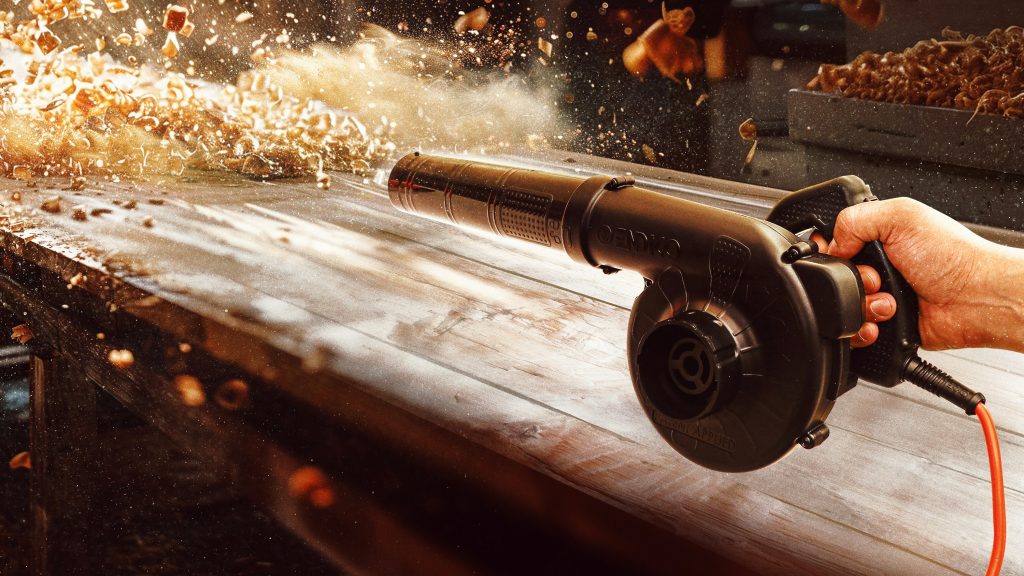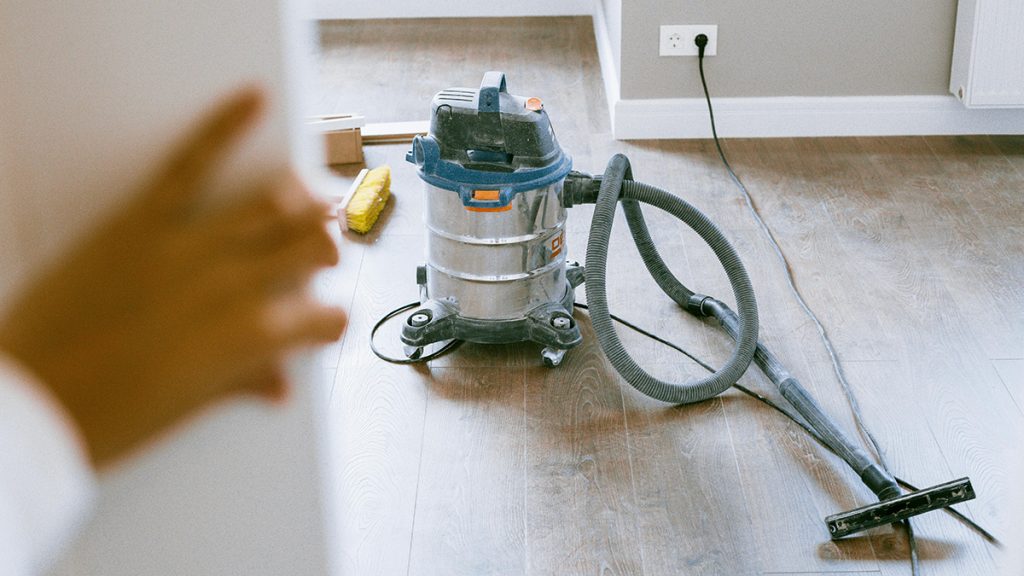
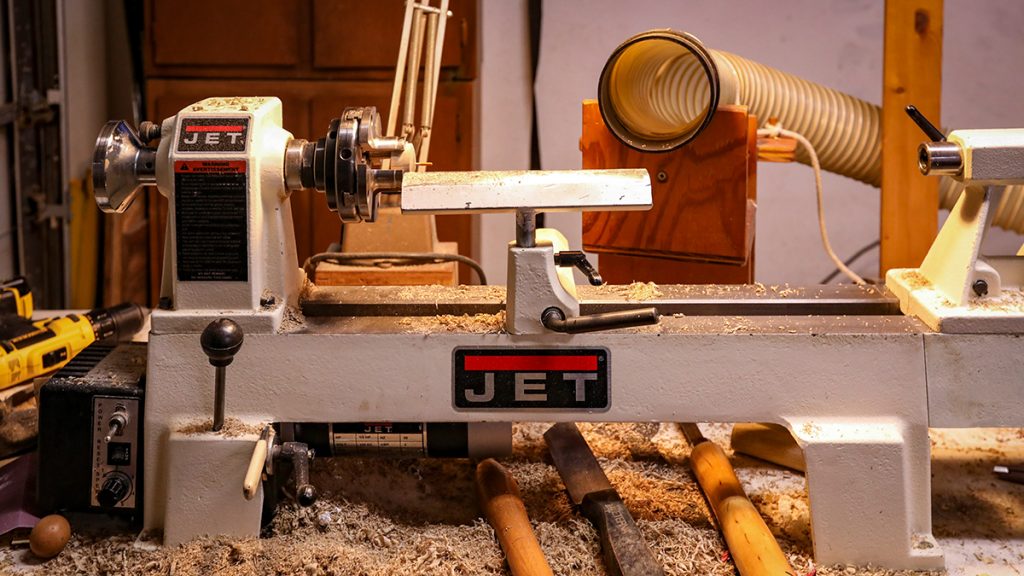
Every woodworker or DIYer eventually learns a frustrating lesson: making a mess with a stationary table saw or planer is easy to manage, but the real dust nightmare comes from small handheld power tools. Handheld orbital sanders, biscuit joiners, trim routers, and track saws produce an incredible volume of microscopic, airborne wood dust. If you don’t catch this dust directly at the tool’s exhaust port, it will coat every single surface in your workshop within minutes.
Connecting a standard 2.5-inch or 4-inch shop vacuum hose to these small tools is a notorious headache. Every manufacturer seems to use a completely different, proprietary exhaust port shape and diameter. Trying to force a rigid plastic hose onto a rubberized tool port usually results in a loose connection that falls apart the moment you move your arm.
To build a truly functional, frustration-free workspace, you need a highly flexible, universal small-tool dust collection hose and adapter kit. Here is a review of the top options engineered to bring seamless extraction to your handheld tool fleet.
The Top Dust Collection Kits Reviewed
When reviewing hose systems for small tools, focus on two critical metrics: hose flexibility (rigid hoses pull on your wrist and tilt your sander, ruining flat finishes) and adapter versatility (flexible rubber swivels that stretch to friction-fit a wide range of millimeter and inch port sizes).
1. Rockler Dust Right FlexiPort Power Tool Hose Kit
Widely considered the ultimate gold standard for small tool dust collection due to its highly innovative, flexible rubber boot system.
-
Hose Style: Ultra-flexible, expandable polyurethane hose
-
Included Ports: 4 distinct, interchangeable rubber FlexiPorts
-
The Highlights: The genius of the Rockler Dust Right system lies in its flexible rubber boots. Instead of rigid plastic adapters that only fit one specific tool, FlexiPorts are made from a supple, rubberized material that stretches effortlessly over mismatched exhaust ports, holding tight via pure friction. The hose itself is a engineering marvel—it expands up to 15 feet during use but collapses down to just a few feet for compact, tangle-free storage on your wall.
-
Best For: Woodworkers with a diverse fleet of tools from different brands (Bosch, DeWalt, Makita) who want a single hose that fits everything.
2. Cen-Tec Systems 94192 Universal Power Tool Hose Kit
An industrial-grade solution famous for its premium crush-proof hose construction and smooth-spinning swivel adapters.
-
Hose Style: Smooth-interior, crush-proof commercial hose
-
Included Ports: 5 multi-size bayonet adapters
-
The Highlights: Cen-Tec approaches tool collection from a heavy-duty commercial angle. The included 16-foot hose features a smooth inner lining that reduces static friction, maximizing the raw air volume (CFM) pulling from your tool. The adapters utilize a clever bayonet locking system that snaps onto the hose with a click. Every adapter features a 360-degree swivel joint, which prevents the hose from twisting, coiling, or kinking as you move your sander across a large workpiece.
-
Best For: Production shops and high-volume sanders who need maximum airflow and demand a hose that can be stepped on without crushing.
3. Bosch VAC024 5-Meter Vacuum Hose
A dedicated, ultra-premium long-reach hose engineered to integrate seamlessly into German-tool ecosystems while offering universal vacuum compatibility.
-
Hose Style: 35mm diameter anti-static heavy-duty hose
-
Included Ports: Integrated locking sleeve adapter
-
The Highlights: If you own a Bosch sander, router, or track saw, this hose connects directly into the tool’s port with a satisfying, click-lock mechanical connection—no adapters required. The adapter nozzle also friction-fits standard 1-1/4 inch ports found on many other brands. Because the hose is a massive 16.4 feet (5 meters) long, you can easily work on large assemblies far away from your dust extractor without dragging the vacuum canister behind you.
-
Best For: Woodworkers who own Bosch or Festool gear and need a premium, extra-long hose that eliminates static shock.
4. Peachtree Woodworking Supply 10-Foot Ultra-Flex Hose Kit
An exceptional budget-friendly entry point that pairs a high-quality transparent hose with simple, reliable rubber couplers.
-
Hose Style: Clear, wire-reinforced PVC hose
-
Included Ports: 2 flexible rubber step couplers
-
The Highlights: The Peachtree kit features a completely transparent hose, allowing you to easily see and pinpoint any accidental clogs or large wood chip blockages instantly. It uses stepped rubber adapters that can be trimmed down with a utility knife to perfectly match your specific tool configuration. The hose is reinforced with an internal steel wire coil, preventing it from collapsing under the intense suction load of large shop vacuums.
-
Best For: Hobbyists and casual DIYers looking for an affordable, straightforward dust collection upgrade for a dedicated sander station.
5. Fulton Woodworking Tools Universal Small Tool Hose Kit
An incredibly versatile kit designed to act as an all-in-one adapter puzzle, allowing you to connect almost any tool port to a standard shop vac.
-
Hose Style: Highly flexible 10-foot vinyl hose
-
Included Ports: 4-step rubber adapter + multi-sized terminal fittings
-
The Highlights: Fulton specializes in solving the “proprietary port problem” by including a multi-tier, stepped rubber adapter cone. You simply slide the cone onto your tool port until it seats tightly, then trim away any unused, smaller tiers with scissors. The kit bridges the gap between small handheld tool ports ($1^{\prime\prime}$ to $1-1/2^{\prime\prime}$) and standard home shop vacuum inlets ($2-1/4^{\prime\prime}$ to $2-1/2^{\prime\prime}$) flawlessly.
-
Best For: DIYers with older or non-standard power tools who need a highly customizable, trimmable adapter kit.
Hose and Adapter System Comparison Matrix
| Kit Model | Hose Length | Hose Type | Connection Style | Static Management | Key Advantage |
| Rockler Dust Right | 3 ft to 15 ft | Expandable Poly | Stretch-Fit Rubber Boots | Standard | Collapses small; boots stretch onto odd shapes |
| Cen-Tec 94192 | 16 feet | Crush-Proof | Quick-Lock Bayonet Swivels | Standard | 360° swivels prevent hose twisting completely |
| Bosch VAC024 | 16.4 feet | Heavy Vinyl | Mechanical Click / Friction | Anti-Static Material | Factory fit for German tools; zero static shocks |
| Peachtree Ultra-Flex | 10 feet | Clear Wire-PVC | Stepped Cut-to-Fit Couplers | Groundable Wire | Clear walls make it easy to spot clogs instantly |
| Fulton Universal | 10 feet | Flexible Vinyl | Trimmable Tiered Cones | Standard | Budget price; trimmable to custom millimeter sizes |
The Optimum Dust Extraction Setup Sequence
Simply jamming a small hose into a sander isn’t enough to achieve a dust-free shop. Handheld tools require specific suction tuning to prevent the tool from sticking to the wood or overheating. Follow this logical shop setup sequence to dial in your extraction system:
3 Vital Rules for Small Tool Dust Collection Efficiency
-
Combat Static Electricity: Air pulling fine wood dust through a plastic hose acts like a giant static generator. If you are using a standard vinyl hose, you will eventually experience annoying static shocks when touching your tool. To solve this, upgrade to an anti-static hose (like the Bosch VAC024) or wrap a bare copper wire along the exterior length of your clear PVC hose, connecting the wire end straight into a grounded metal screw on your dust collector chassis.
-
Mind the CFM vs. Static Pressure Balance: Large dust collectors (the ones with 4-inch or 5-inch green metal pipes) are built for high CFM (Cubic Feet per Minute)—they move massive clouds of air through wide pipes. However, if you reduce a 4-inch line down to a 1-inch small tool port, the airflow chokes completely. For small tools, you need Static Pressure (Suction Velocity) instead of raw air volume. Use a dedicated shop vacuum or a specialized portable dust extractor rather than a large workshop central dust collection system.
-
Clean the Internal Tool Passages: Even the best hose kit will fail if the tool’s internal dust ports are physically blocked. Sanding sticky materials or wet woods can cause fine dust to paste together inside the small plastic internal channels of your sander or router base. Every few weeks, pull your adapter off, take an air blow gun, and blast compressed air through the tool’s exhaust port to clear out any hidden, hardened dust cakes.
Amazon Disclaimer:
As an Amazon Associate, I earn from qualifying purchases. This means that if you click on certain links within this post and make a purchase, I may receive a small commission at no additional cost to you. This helps support the site and allows us to continue creating high-quality DIY content.