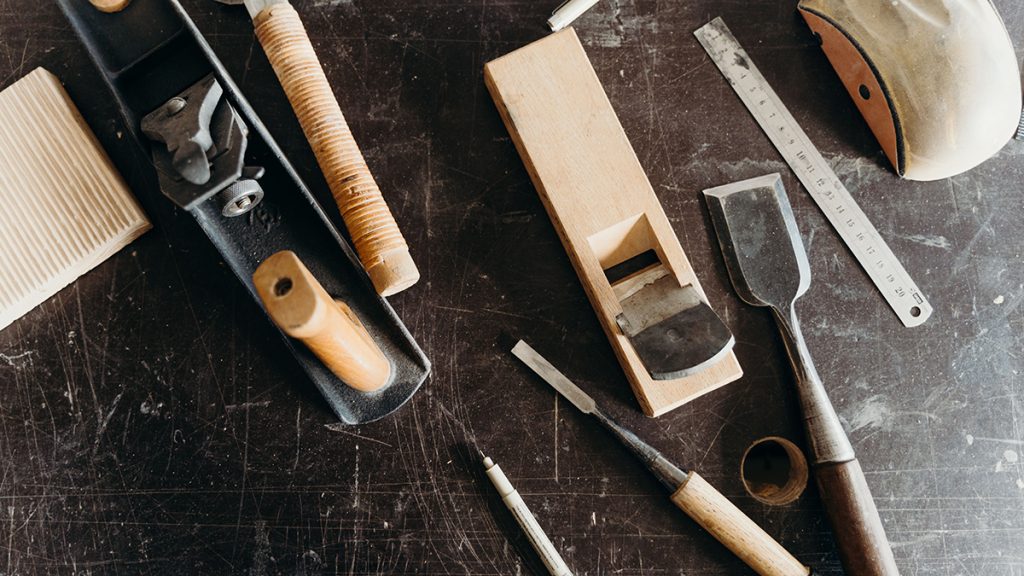
Every woodworker, carpenter, and cabinet maker needs a dependable hand plane. While massive bench planes excel at flattening giant timber slabs or squaring up long board edges, the compact block plane is the tool you will find yourself reaching for dozens of times a day. It is the ultimate shop sidekick—small enough to fit into an apron pocket but versatile enough to solve an array of precision layout problems.
A block plane is uniquely engineered to be held comfortably in a single hand, giving you exceptional control over delicate work. It is specifically designed to tackle small, fussy shop tasks: shaving down a sticking cabinet drawer, establishing a flawless chamfer along a table corner, breaking sharp edges, cleaning up dry glue lines, and most importantly, slicing smoothly through dense, stubborn end grain.
Here is a review of the best block planes for small tasks and end grain work, along with the technical adjustments needed to get micro-thin, wispy wood shavings.
The Secret to End Grain: Standard vs. Low-Angle
Before selecting a block plane, you must look at the bedding angle of the iron (blade). Unlike standard bench planes where the blade sits bevel-down, a block plane features a bevel-up configuration where the blade sits flat on its bed with the sharpened bevel facing the ceiling
-
Standard-Angle Block Planes (20° Bedding): The blade sits at a 20-degree angle on the body casting. Paired with a standard 25-degree blade bevel, this creates a total effective cutting angle of 45 degrees. This setup is highly optimized for shaving along the face or edge grain of standard timbers, acting like an all-purpose trimmer.
-
Low-Angle Block Planes (12° Bedding): The blade sits much lower at a 12-degree angle. Combined with a 25-degree blade bevel, it creates a total effective cutting angle of just 37 degrees. This ultra-low approach vector is a game-changer for end grain work. Instead of tearing, splitting, or fracturing the upright wood fibers (which act like a bundle of tight drinking straws), the low angle slices across them cleanly like a razor blade.
The Top Block Planes Reviewed
1. Veritas DX60 Premium Low-Angle Block Plane
Widely considered the absolute pinnacle of modern hand tool engineering for its elite ergonomics and rock-solid adjustments.
-
Bedding Angle: 12° (Low-Angle)
-
Body Material: Fully machined ductile iron
-
The Highlights: The Veritas DX60 is an absolute masterpiece. It features a unique, die-cast Norris-style combined feed and lateral adjustment mechanism, allowing you to dial in your blade depth and side-to-side alignment with microscopic precision using a single brass knob. The body features deep finger-rest recesses for unparalleled comfort. Crucially, it includes an adjustable mouth plate that lets you close the gap in front of the blade to a tiny hairline slit, preventing grain tear-out completely.
-
Best For: Woodworking purists and fine cabinet makers who demand zero-tolerance tool accuracy and a glass-smooth surface.
2. Lie-Nielsen No. 60-1/2 Adjustable Mouth Low-Angle Block Plane
An heirloom-quality classic that perfectly recreates and elevates the legendary Stanley Stanley bedrock designs using premium modern metallurgy.
-
Bedding Angle: 12° (Low-Angle)
-
Body Material: Ductile iron casting with a thick cryogenic-treated A2 steel blade
-
The Highlights: Lie-Nielsen tools are famous for their flawless out-of-the-box performance. The 60-1/2 features a heavy, thick blade that resists chattering and flexing when slamming into hard, dense end-grain fibers. The iron body is precision-ground completely flat and square to the sides, allowing you to use the tool flat on its side on a shooting board. The cap iron is made of polished solid brass, adding beautiful contrast and excellent weight distribution.
-
Best For: Fine furniture builders who value traditional tool styling, heavy-mass dampening, and flawless end-grain slicing.
3. Stanley Sweetheart No. 12-139 60-1/2 Block Plane
An exceptional middle-ground contender that brings a historic premium line back to life for budget-conscious makers.
-
Bedding Angle: 12° (Low-Angle)
-
Body Material: Ductile iron with a solid brass adjustment assembly
-
The Highlights: Stanley’s “Sweetheart” line pays homage to their golden age of manufacturing. This plane features a heavy-duty casting with a precision-ground base. It uses a thick, high-performance A2 steel blade that holds a razor edge significantly longer than standard carbon steel. It includes a fully adjustable mouth and a fluid depth adjustment wheel that operates smoothly without binding.
-
Best For: Intermediate woodworkers and hobbyists looking for premium low-angle features at an affordable price point.
4. Luban / WoodRiver No. 60-1/2 Low-Angle Block Plane
A highly reliable, rugged job-site and workshop workhorse designed for contractors and carpenters who need durability and consistency.
-
Bedding Angle: 12° (Low-Angle)
-
Body Material: Heavy ductile iron casting
-
The Highlights: WoodRiver delivers incredible industrial value. This plane mimics the classic design metrics of traditional English planes, packing a heavy casting that absorbs heavy hand strokes beautifully. The side walls are machined perfectly perpendicular to the sole, making it highly efficient for squaring up small frame joints. The blade adjustment mechanism is robust and stands up to rough toolbox travel without shifting out of alignment.
-
Best For: Trim carpenters, furniture hobbyists, and makers who want a heavy, reliable toolroom performer.
Block Plane Performance Matrix
The Perfect End-Grain Shaving Sequence
End grain is highly stubborn and brittle. If you just grab a block plane and blindly slide it across the end of a board, the blade will split out the far corner of the wood as it exits, causing an ugly fracture known as “blowout” or “spalling.” Follow this strict processing sequence to guarantee an absolutely pristine, splinter-free edge profile:
3 Vital Rules for Block Plane Maintenance
-
Retract the Blade Before Rest Bench Placement: When you set your block plane down on your wooden workbench between cuts, never set it down flat on its sole with the blade extended. If the sharp edge knocks against a hidden metal screw, a hard knot, or an abrasive grain of dirt on your bench top, the blade will nick or dull instantly. Always rest the tool on its side profile face, or turn the depth adjustment knob to fully retract the blade inside the mouth cavity before storage.
-
Keep the Sole Waxed and Slick: High-density hardwoods create immense friction drag against the cast-iron sole of your plane, making it feel hard to push. To make the tool glide like it is floating on ice, take a block of pure paraffin wax or beeswax and scribble a quick, light zig-zag line down the bottom sole plate. The thin layer of wax eliminates friction, allowing you to use less physical effort and giving you a far better tactile “feel” for how the blade is cutting.
-
Guard Against Rust Immediately: Your hands naturally sweat when holding a block plane inside your warm palm for hours. The salt and moisture from your skin will cause raw cast-iron and carbon steel tools to develop rust spots overnight. When your shop session ends, always spray a clean rag with a light moisture-repelling machine oil (such as Camellia oil, Boeshield T-9, or light mineral oil) and wipe down all the metal faces to seal the iron from ambient humidity.
Amazon Disclaimer:
As an Amazon Associate, I earn from qualifying purchases. This means that if you click on certain links within this post and make a purchase, I may receive a small commission at no additional cost to you. This helps support the site and allows us to continue creating high-quality DIY content.