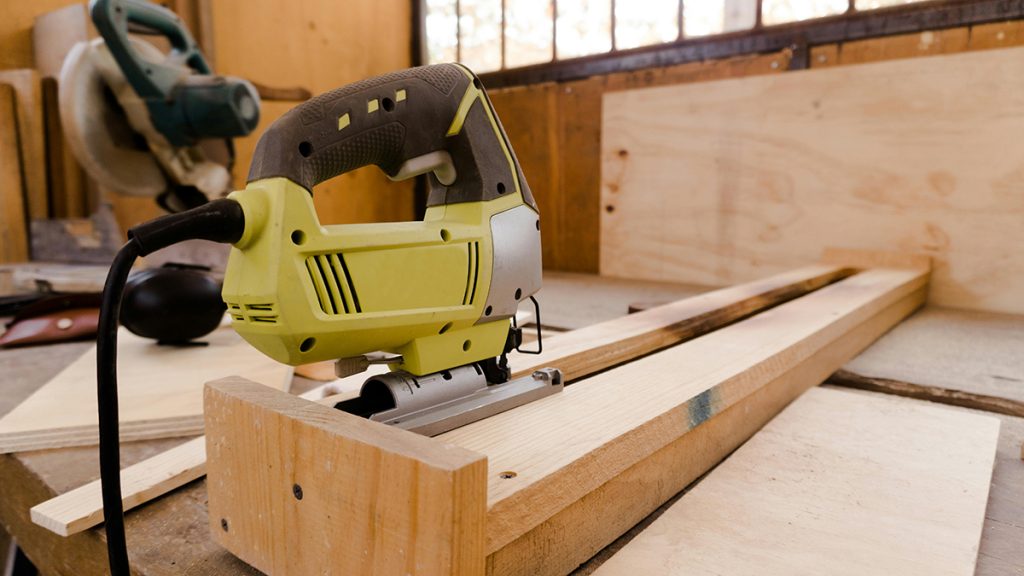

When it comes to cutting intricate curves, executing tight interior radius profiles, or making quick custom cutouts for electrical boxes in cabinet backs, no tool handles the task quite like a jigsaw. But if you are looking to add a new jigsaw to your tool arsenal—or upgrade an old one—you face a fundamental question that divides woodworkers and installers alike: Should you go corded or cordless?
A decade ago, the choice was simple. Corded jigsaws offered reliable, unyielding motor power, while cordless models were heavy, underpowered, and ran out of battery after a few minutes of cutting thick oak. However, the rise of advanced brushless motors and high-capacity lithium-ion batteries has completely rewritten the rules. Today, cordless jigsaws routinely match the raw cutting performance of their plug-in cousins, making the decision all about your specific workshop layout, budget, and project types.
Here is a comprehensive breakdown of the corded vs. cordless jigsaw debate to help you choose the ultimate configuration for your shop.
The Powerhouse: The Corded Jigsaw
If your woodworking strategy revolves around a dedicated workbench or a fixed assembly station, a corded jigsaw remains an absolute marvel of reliability and continuous production.
-
Continuous, Unfading Runtime: The most obvious advantage of a corded jigsaw is that it never runs out of juice. You can plug it into an outlet and spend all day slicing thick plywood sheets or sawing out dozens of custom corbels without ever having to stop to swap or charge a battery.
-
Superior Power-to-Weight Ratio: Because a corded jigsaw doesn’t have to carry a heavy 2-pound battery pack on its tail, the tool itself is significantly lighter and more compact. This lower weight centers the tool’s mass directly over the shoe plate, giving you exceptional control, reducing hand fatigue, and allowing you to feel exactly how the blade interacts with the wood fibers.
-
Unmatched Horsepower for the Price: Dollar for dollar, corded jigsaws deliver massive motor torque at a fraction of the cost of high-end cordless setups. A premium 6.5-Amp corded model will plow through dense 2-inch thick hardwoods easily without straining your budget.
The King of Mobility: The Cordless Jigsaw
For field installers, trim carpenters, and woodworkers who value maximum physical agility and rapid, hassle-free tool deployment, cordless models offer unparalleled freedom.
-
Zero Cord Snagging Risks: When navigating a complex, winding curve across a massive sheet of plywood, managing a trailing extension cord is incredibly frustrating. If the cord catches on a sharp workbench corner mid-cut, the drag will cause your hand to stutter—instantly translating into a jagged blemish or a broken blade. Going cordless completely eliminates this risk.
-
Immediate Setup and Deployment: If you just need to make a quick 5-second notch on a trim piece or cut a plumbing hole under a kitchen sink base cabinet, pulling out a cordless jigsaw, clicking in a battery, and making the cut takes seconds. There is no hunting for outlets, untangling knots, or rolling out heavy cord reels.
-
Perfect for Ladders and Scaffolding: If your building projects take you up onto ladders to trim roof rafters or out into the backyard away from an electrical source, cordless tools are safer, more convenient, and completely self-sufficient.
Jigsaw Core Configuration Comparison Matrix
| Performance Metric | Corded Jigsaws (6.5+ Amp) | Cordless Jigsaws (18V / 20V Max) |
| Runtime Capacity | Unlimited (Constant wall power) | Limited by battery Ah capacity (approx. 30–45 mins heavy use) |
| Tool Weight Profile | Lightweight & agile (No battery pack) | Heavier; tail-weighted design |
| Average Cost Profile | Budget-friendly (Bare tool provides maximum power) | Higher initial investment (Requires batteries & charger) |
| Best Workshop Setting | Small, fixed benches & high-volume template cutting | Large workspaces, on-site installs, & mobile tracking |
| Blade Speed Stability | Flawless constant velocity | High stability (if utilizing a brushless motor) |
Step-by-Step Sequence: Turning a Jigsaw Into a Precision Precision Tool
Many woodworkers complain that jigsaws make sloppy, angled cuts where the blade deflects or bends inside the wood. This issue isn’t caused by the power type—it is caused by incorrect tool adjustment. Follow this strict mechanical calibration sequence to get dead-square, mirror-smooth cuts every time:
3 Vital Rules for Maintaining Jigsaw Longevity
-
Match Your Battery to the Task: If you choose the cordless route, pay close attention to your battery capacity (Ah rating). Jigsaws are high-draw power tools. Running a cordless saw on a compact, slim 2.0 Ah battery will quickly cause the cells to overheat and choke your cutting velocity. To maintain unyielding cutting torque and ensure your motor doesn’t bog down mid-cut, use a high-capacity 4.0 Ah or 5.0 Ah battery.
-
Clear the Roller Guide Bearing Slot: Every modern jigsaw uses a small, grooved roller bearing guide wheels positioned right behind the blade shank to prevent the blade from bending backward. Fine wood dust mixed with sticky sap can quickly clog this tiny wheel, causing it to freeze up. If the roller stops spinning, the friction from the high-speed blade will quickly overheat the tool, dull your blades instantly, and ruin the internal guide housing. Apply a drop of light machine oil to the wheel bearing every few project sessions to keep it spinning freely.
-
Let the Motor Breathe: Because jigsaws are frequently used to cut internal shapes inside closed spaces (like sink cutouts or cabinet interiors), the tool’s internal cooling vents are constantly bombarded with fine, airborne wood chips. If these vents clog, the motor will rapidly overheat. After every major cutting session, take an air blow gun and blast compressed air through all the motor housing slots to clear out any packed sawdust.
Amazon Disclaimer:
As an Amazon Associate, I earn from qualifying purchases. This means that if you click on certain links within this post and make a purchase, I may receive a small commission at no additional cost to you. This helps support the site and allows us to continue creating high-quality DIY content.