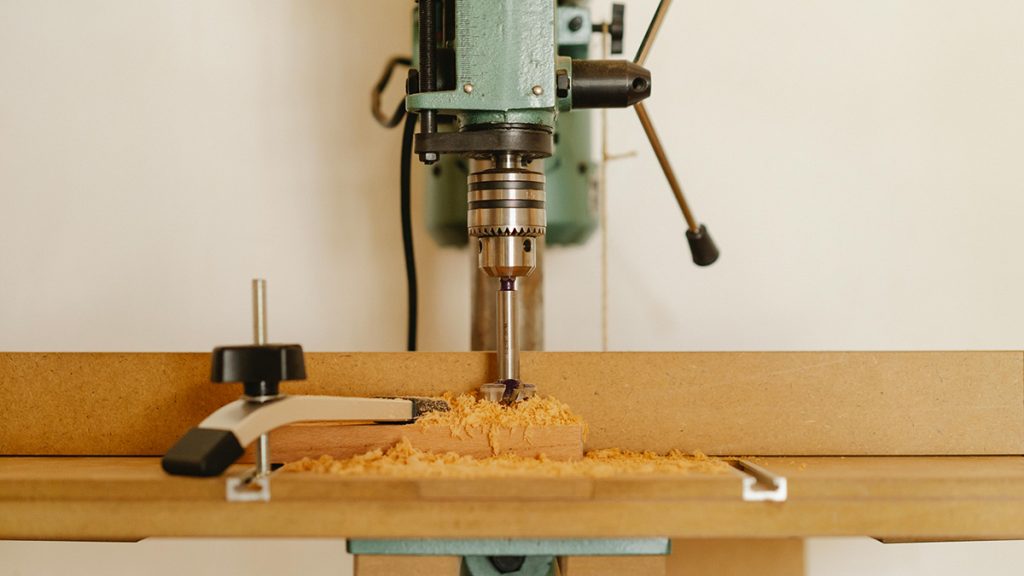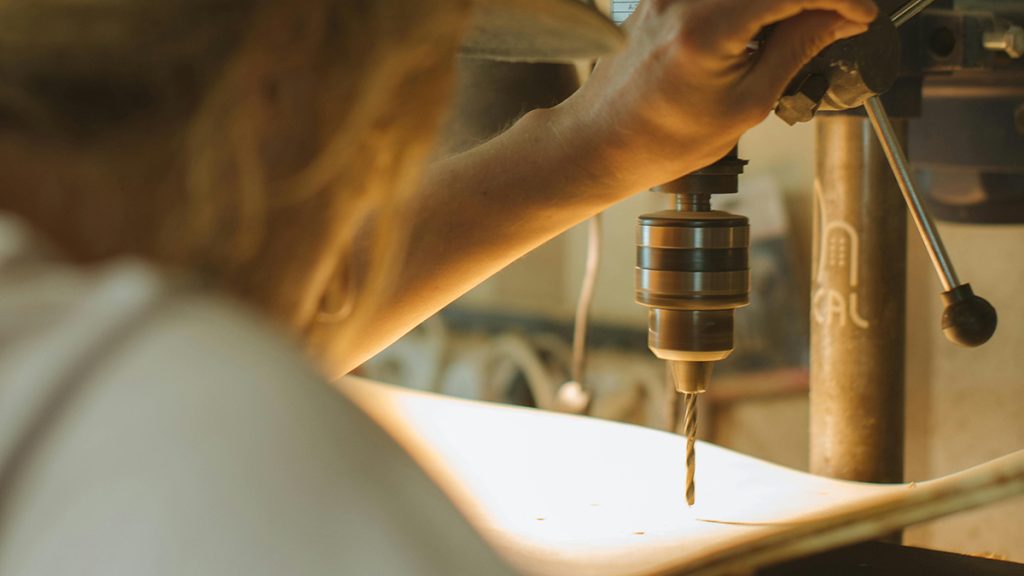

A drill press is an incredibly powerful toolroom asset, but it can also be one of the most dangerous machines in your shop if not treated with respect. A massive mistake many woodworkers and metal fabricators make is attempting to hold a small workpiece using only their bare hands while plunging a large drill bit or hole saw into the material.
If the cutting edge of the bit catches a tough grain knot or a sharp metal burr, it will instantly seize the material. In a fraction of a second, the spinning drill motor will wrench the stock out of your hand, spinning it at high velocity. This terrifying phenomenon is known as the “helicopter effect”—and it easily shatters fingers, tears skin, and ruins expensive workpieces.
Investing in a heavy-duty drill press vise is the ultimate upgrade for both your personal safety and your machining precision. By mechanically locking your stock down into a heavy cast-iron or steel frame, you completely eliminate the risk of spin-outs. Furthermore, a stable vise keeps your stock perfectly plumb and square to the chuck, ensuring your holes are bored dead-straight without any walking or drill deflection.
Here is a comprehensive review of the best drill press vises available for workshop safety and ultra-fine precision.
The Top Drill Press Vises Reviewed
When selecting a vise for your drill press table, prioritize a heavy cast-iron base with elongated mounting slots (so you can easily bolt it down down to your table’s miter slots) and precision-ground jaws that clamp stock tightly without flexing.
1. Wilton 11744 4-Inch Industrial Drill Press Vise
Widely considered the absolute gold standard for heavy-duty metal fabrication shops and demanding professional toolrooms.
-
Jaw Width: 4 inches
-
Material Construction: High-tensile ductile iron casting
-
The Highlights: Wilton is legendary for manufacturing elite-tier clamping tools. The 11744 features continuous-ground sides and a dead-flat base, allowing it to sit perfectly level on your drill table with zero rocking. The jaws feature a clever mix of horizontal and vertical V-grooves, which securely cradle round steel bars or pipes without letting them slip or tilt when vertical drilling pressure is applied.
-
Best For: Advanced metalworkers, professional machine shops, and anyone who wants an indestructible, industrial-grade casting.
2. WEN 424DPV 4-Inch Cast Iron Drill Press Vise
The undisputed favorite for budget-conscious hobbyists, home woodworkers, and compact DIY garage workshops.
-
Jaw Width: 4 inches
-
Material Construction: Heavy-duty powder-coated cast iron
-
The Highlights: WEN delivers an incredibly rugged and stable vise at an unbeatable price point. Weighing in at over 7 pounds, this cast-iron unit features a series of generous mounting slots running along the outer perimeter, making it highly compatible with almost any drill press table layout on the market. The jaw plates are made from textured hardened steel to bite deep into both timber and metal stock.
-
Best For: Hobbyists and casual DIYers looking for a massive safety and accuracy upgrade without spending a fortune.
3. Palmgren 4-Inch Cross Slide Drill Press Vise
The ultimate mechanical choice if you want to turn your standard drill press into a high-precision layout machine for repetitive hole spacing.
-
Jaw Width: 4 inches
-
Material Construction: Close-grained premium cast iron
-
The Highlights: A standard vise requires you to loosen table bolts and slide the entire heavy iron unit around manually to align your layout marks under the bit. The Palmgren Cross Slide completely changes the game by introducing dual-axis travel wheels. By cranking the calibrated handwheels, you can smoothly move the jaws along the X and Y axes with microscopic precision down to 0.001 of an inch—perfect for milling slots or drilling perfectly spaced rows of holes.
-
Best For: Fabricators executing high-precision layout patterns, small prototyping projects, and minor milling operations.
4. Irwin Tools 226340 4-Inch Quick-Release Drill Press Vise
An exceptional, time-saving production option designed specifically for makers who perform rapid, repetitive stock changes.
-
Jaw Width: 4 inches
-
Material Construction: Forged steel and cast iron components
-
The Highlights: If you are drilling holes through 50 different metal brackets, constantly winding and unwinding a traditional vise handle becomes an exhausting chore. The Irwin Quick-Release features a specialized split-nut mechanism. By pressing a quick-release button, you can instantly slide the jaw wide open or shut it tightly against your stock, bypassing the long screw threads entirely. One quick final turn of the handle then locks the workpiece down with maximum clamping force.
-
Best For: High-volume assembly tasks, repetitive manufacturing jobs, and busy production environments.
Drill Press Vise Feature Comparison Matrix
| Vise Model | Core Material | Special Utility Feature | Weight Profile | Best Primary Application |
| Wilton 11744 | Ductile Iron | Precision V-Grooved Jaws | Heavy (~11 lbs) | Heavy-duty metal machining & round bars |
| WEN 424DPV | Standard Cast Iron | Universal Mounting Slots | Medium (~7 lbs) | All-purpose home workshops & budget setups |
| Palmgren Cross Slide | Premium Cast Iron | Dual-Axis X-Y Travel Wheels | Extra Heavy (~20 lbs) | Micro-accurate layout lines & slot milling |
| Irwin 226340 | Cast Iron & Steel | Split-Nut Quick-Release Button | Light-Medium (~6 lbs) | High-speed repetitive batch production |
The Safe Boring Sequence: Locking Down Your Vise
Simply resting a vise loosely on your drill press table does not guarantee safety. If a large bit binds up tightly inside a piece of steel, it can swing the entire iron vise around violently, smashing anything in its path. Follow this strict physical tracking and clamping sequence to guarantee absolute safety:
3 Vital Rules for Maintaining Vise Accuracy and Safety
-
Never Drill Into Your Vise Base: A classic mistake that quickly ruins a precision vise is plunging your drill bit straight through your workpiece and directly into the cast-iron base of the tool itself. Over time, these accidental cut marks create deep trenches, burrs, and high spots that prevent future workpieces from sitting perfectly flat. To prevent this, always place a cheap, flat piece of scrap wood (known as a sacrificial backer board) directly beneath your workpiece before clamping. This cushions the exit blowout and protects your iron casting from accidental bit contact.
-
Keep the ACME Screws Clean and Oiled: The main lead screw on a drill press vise is constantly bombarded with highly abrasive hot metal shavings, fine wood dust, and cutting fluids. If this debris packs into the threads, it creates massive friction, making the handle incredibly hard to turn and stripping out the internal tracking threads. Use a stiff nylon brush to sweep out the threads after every project session, and apply a thin coating of dry graphite lubricant or light machine oil to keep the mechanism operating smoothly.
-
Mind the Round Stock Orientation: When clamping metal rods, steel pipe conduit, or wooden dowels, never clamp them haphazardly between flat jaw faces. Cylindrical stock has minimal contact area against a flat surface, allowing it to easily pivot, slip, or slide upward under heavy drilling forces. Always utilize the machined vertical or horizontal V-grooves built into the jaw faces to cradle the cylinder across four uniform tracking vectors, ensuring absolute structural stability.
Amazon Disclaimer:
As an Amazon Associate, I earn from qualifying purchases. This means that if you click on certain links within this post and make a purchase, I may receive a small commission at no additional cost to you. This helps support the site and allows us to continue creating high-quality DIY content.