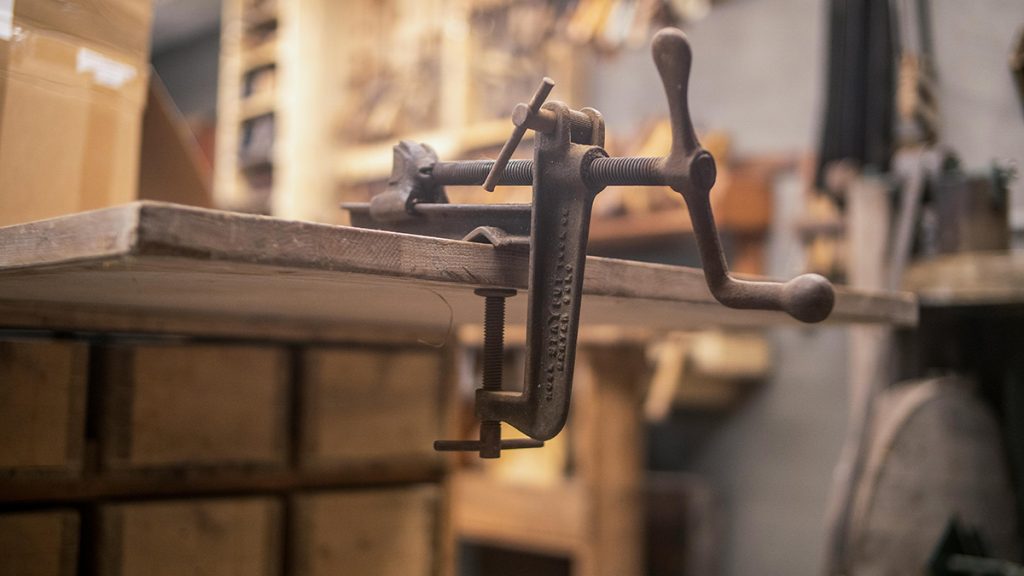
Every woodworking project, from a simple birdhouse to a complex dining table, relies on one thing: pressure. Without the right clamps, your glue joints will fail, and your assemblies will be out of square.
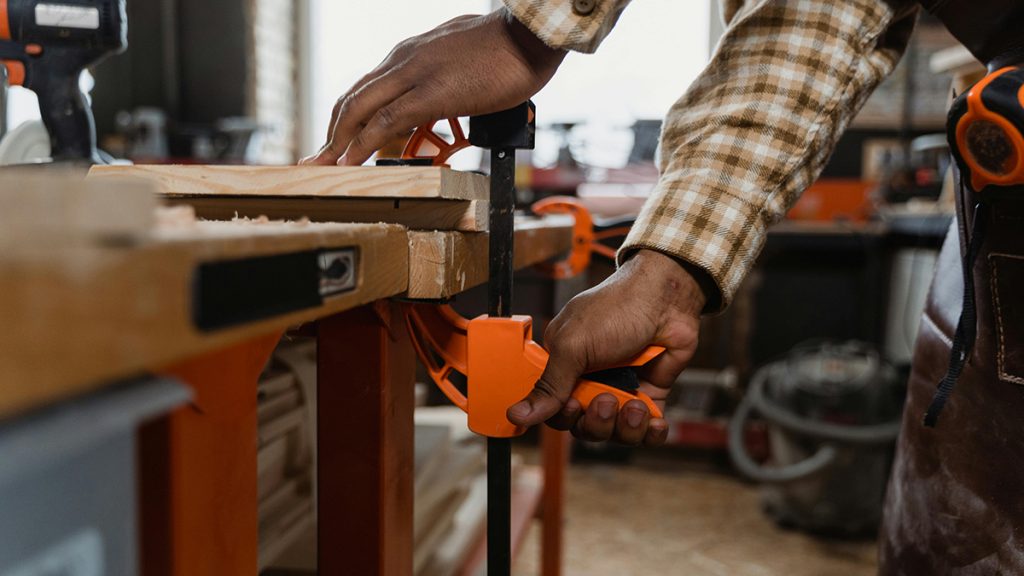
For the modern DIYer, two types of clamps are essential. Quick-Grip clamps allow for one-handed operation, perfect for holding a board while you reach for your impact driver. F-Clamps provide the high-torque screw pressure needed for deep glue-ups. Here are the top 5 clamps on Amazon that offer the best grip and durability for your workshop.
Clamping Tool Comparison Table
| Model | Type | Clamping Force | Key Feature |
| IRWIN QUICK-GRIP (XP) | Quick-Grip | 600 lbs | One-Handed Operation |
| Bessev Clutch Style F-Clamp | Traditional F-Style | 660 lbs | Non-Slip Clutch Discs |
| DEWALT Large Trigger | Quick-Grip | 300 lbs | Reinforced Nylon Body |
| Jorgensen Steel Bar Clamp | Heavy-Duty F | 1,000 lbs | Cast Iron Jaws |
| WORKPRO 6-Piece Set | Starter Kit | Various | Best Budget Value |
1. The Versatile Workhorse: IRWIN QUICK-GRIP (XP Series)
The IRWIN XP (Extra Pressure) is the gold standard for one-handed clamps. While cheaper trigger clamps often slip, the XP delivers a massive 600 lbs of force.
Why it’s perfect for woodworkers:
It features a unique “Quick-Change” button that allows you to turn the clamp into a spreader in seconds. This is a lifesaver when you need to push apart a tight mortise and tenon joint. The non-marring pads are large enough to protect soft woods like Pine or Cedar without needing scrap blocks.
-
Pros: Powerful one-handed grip, very durable I-beam bar, tool-free conversion.
-
Cons: The trigger mechanism can be tiring for very small hands.
2. The Precision Choice: Bessey Clutch Style F-Clamp
Bessey is a German brand that has specialized in clamps for over 100 years. Their “Clutch Style” bar clamps are a favorite for furniture makers.
Why it’s essential:
Unlike trigger clamps, these use a traditional screw handle. This allows you to “feel” the pressure and apply it exactly where needed for fine joinery. The nickel-plated serrated rail prevents the jaw from slipping, even under maximum tension.
-
Pros: Exceptional build quality, ergonomic wooden handle, best for glue-ups.
-
Cons: Requires two hands to set up and tighten.
3. Best for Assembly: DEWALT Large Trigger Clamp
DEWALT’s trigger clamps are known for their speed and robust “over-molded” grip.
Why it’s perfect for woodworkers:
These are designed for the jobsite. The body is made of reinforced nylon that won’t shatter if dropped on a concrete floor. They are perfect for holding clamping jigs or securing a board to your workbench for routing.
-
Pros: Very lightweight, smooth trigger action, high visibility yellow color.
-
Cons: Lower clamping force (300 lbs) compared to the Irwin XP.
4. The Heavy-Duty King: Jorgensen Steel Bar Clamp
If you are building a workbench top or gluing up thick panels, you need the raw power of cast iron.
Why it’s essential:
Jorgensen uses a classic design with cast iron jaws and a high-carbon steel bar. With a 1,000 lb rating, these can pull even the most stubborn warped boards into alignment. The “Pony” style orange paint is a symbol of quality in woodshops across America.
-
Pros: Highest clamping force, indestructible cast iron, very long life.
-
Cons: Very heavy; the metal jaws can mar wood if you don’t use protective pads.
5. Best Starter Set: WORKPRO 6-Piece Kit
If you are just starting out and your “clamp rack” is empty, this multi-pack is the most cost-effective way to begin.
Why it’s perfect for woodworkers:
It includes a mix of different sizes ($6″$, $12″$, and small spring clamps). While they aren’t industrial-grade, they are perfectly adequate for DIY crafts, building shelves, or holding parts while you wait for the wood glue to dry.
-
Pros: Incredible value, varied sizes, perfect for beginners.
-
Cons: Not intended for high-torque professional glue-ups.
3 Rules for Successful Clamping
-
Don’t Over-Tighten: It’s a common mistake. If you apply too much pressure, you will “starve” the joint by squeezing all the wood glue out. You want a thin, even bead of “squeeze-out,” not a dry joint.
-
Check for Square: Clamps apply force in a straight line. If your clamp is at a slight angle, it will pull your project out of square. Always use a speed square to check your corners after tightening.
-
Alternate Sides: When gluing up a panel (like a cutting board), place one clamp on top of the wood and the next one underneath. This alternating pressure prevents the panel from “bowing” or cupping.
Final Verdict
-
For maximum versatility and speed, the IRWIN QUICK-GRIP XP is the winner.
-
For serious furniture glue-ups, you can’t beat Bessey F-Clamps.
-
For heavy-duty alignment tasks, go with the Jorgensen Cast Iron.
Read too: Best Strap Clamps for Odd-Shaped Glue-ups: Top 5 Solutions
Disclaimer: As an Amazon Associate, I earn from qualifying purchases. Conquer the elements!