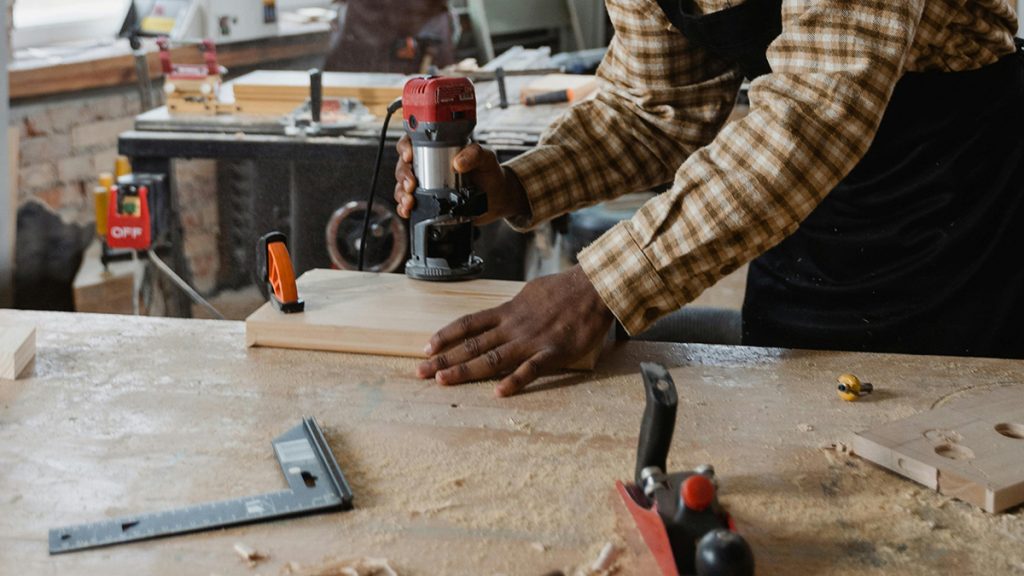
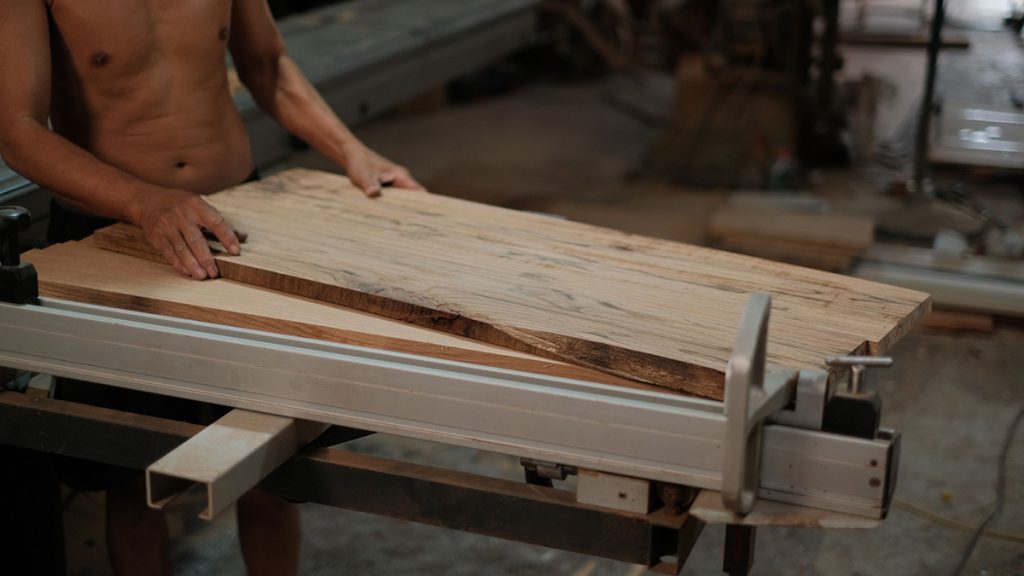
When acquiring a gorgeous live-edge walnut, maple, or oak slab for a custom dining table or coffee table, you immediately face a major workshop challenge: live-edge slabs are rarely flat. Warping, cupping, twisting, and sawmill blade marks mean a raw slab will rock violently across a workbench, making traditional hand-planing or drum-sanding an exhausting, inaccurate nightmare.
Trying to cram a heavy slab through a standard 13-inch thickness planer will destroy the planer cutterhead and jam the feed rollers instantly.
The ultimate workshop solution for flattening oversized timber slabs is building a custom DIY router sled and leveling jig.
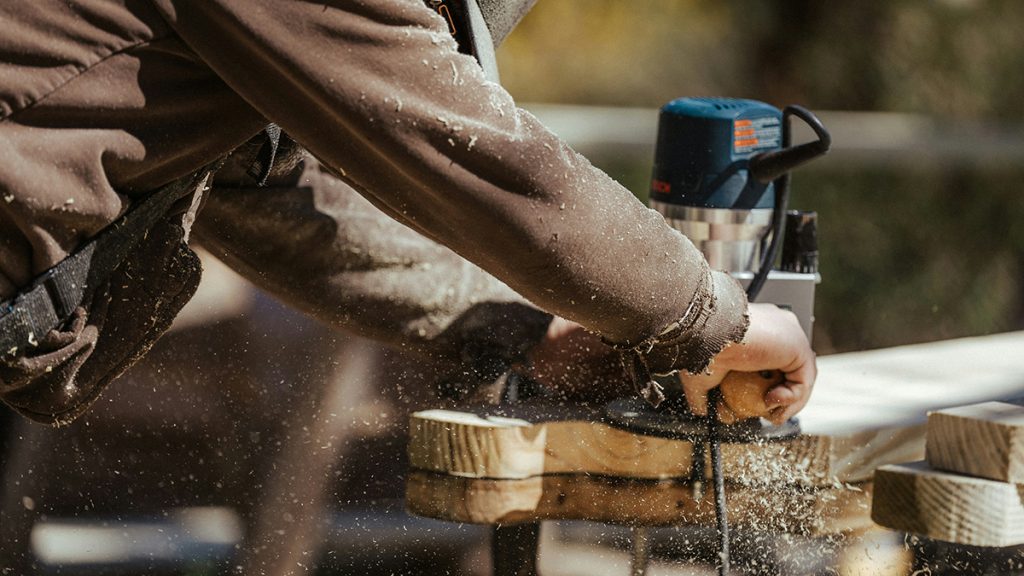
A router sled mounts a heavy-duty woodworking router onto rigid aluminum extrusion rails or straight plywood tracks that bridge across two parallel leveling rails flanking your slab.
By passing a wide surfacing bit back and forth across the board in overlapping tracks, the router shaves away high spots, transforming a twisted, uneven log slice into a dead-flat, reference-plane tabletop.
Here is a review of the top 5 flattening tools and essential Amazon accessories, followed by a detailed material selection matrix and the step-by-step physical build and surfacing workflow.
Must-Have Router Sled Tools & Accessories on Amazon
Building an ultra-rigid router sled and flattening slabs successfully relies on heavy-duty plunge routers, carbide slab-surfacing flattening bits, extruded aluminum guide rails, and precision shims. These top-rated Amazon products deliver elite timber flattening performance:
1. The Pro Heavy-Duty Router Benchmark: DEWALT 2.25 HP Fixed/Plunge Router Base Kit
Widely recognized across woodworkers as the most reliable, powerful mid-to-heavy router for powering wide surfacing bits across dense hardwood slabs.
-
The Highlights: Powered by a robust 2.25 HP variable-speed motor, the DeWalt DW618PK maintains constant cutting speed under heavy load. Its micro-depth adjustment ring allows you to dial in vertical cutting depths by fractions of a millimeter, ensuring clean, incremental passes without straining the motor.
-
Best For: Powering slab-flattening router bits and precision depth control.
2. Industrial Slab-Surfacing Flattening Bit: SpeTool 2-Inch Carbide Insert Slab Flattening Router Bit (1/2-Inch Shank)
Standard straight router bits leave ridges and burn marks when surfacing wide wood panels; a specialized 4-wing insert surfacing bit cuts a wide, glass-flat path.
-
The Highlights: Featuring 4 carbide insert cutting edges and a balanced industrial steel body with a heavy 1/2-inch shank, this SpeTool bit planes wood fibers cleanly without tearing interlocked grain. When edges dull, you simply rotate or replace the indexable carbide knives rather than buying an entirely new bit.
-
Best For: Rapid, tear-free wood removal across wide live-edge slabs.
3. Heavy-Duty Extruded Aluminum Guide Rails: POWERTEC Universal T-Track / Aluminum Extrusion Rails
Your router sled rides entirely on parallel side rails; if those rails flex under the weight of the router, your flattened slab will feature hollow valleys and dips.
-
The Highlights: Extruded from heavy-gauge aircraft aluminum with thick structural walls, POWERTEC rails resist twisting, bowing, and sagging under heavy downward pressure. They provide a frictionless, dead-straight sliding surface for your router sled carriages.
-
Best For: Building rigid, non-flexing side track rails for the router carriage to ride upon.
4. Low-Tack Wood Shims & Leveling Wedges: Qualihome Wood Furniture Shims
Placing a twisted slab directly onto a flat leveling frame will cause the slab to flex downward when pressed by the router, resulting in an uneven cut once released.
-
The Highlights: Precision-cut from solid pine wedges, these shims let you slide wooden wedges underneath the four corners of your live-edge slab until it rests 100% rock-solid without rocking or springing. Securing a stable foundation prevents the slab from flexing during surfacing passes.
-
Best For: Wedging beneath live-edge slabs to eliminate twisting and spring flex.
5. Heavy-Duty Shop Dust Extraction Hose: POWERTEC 4-Inch x 10-Foot Flexible Dust Collection Hose
Router slab flattening generates a massive volume of coarse wood chips and fine dust that can blind your cutting path within seconds.
-
The Highlights: Constructed from heavy-duty, puncture-resistant clear PVC reinforced with a spring steel wire helix, this 4-inch hose connects your router sled dust hood directly to your shop dust collector, sucking up wood chips before they obscure your view.
-
Best For: Evacuating high-volume wood chips during deep slab-flattening passes.
Router Sled Component & Material Comparison Matrix
| Component Profile | Amazon Product Link | Material / Specification | Primary Function | Primary Workshop Advantage |
| Heavy-Duty Router | DeWalt DW618PKB Router | 2.25 HP / Variable Speed | Power & Depth Control | Maintains high torque under heavy slab-surfacing loads |
| Surfacing Router Bit | SpeTool 2″ Carbide Bit | Indexable Carbide / 1/2″ Shank | Wood Surface Leveling | 4-wing design cuts a wide, glass-flat path without tearing grain |
| Aluminum Guide Rails | POWERTEC Aluminum Rails | Heavy Extruded Aluminum | Router Carriage Track | Rigid metal rails prevent bowing and flexing across wide spans |
| Wood Leveling Shims | Qualihome Wood Wedges | Solid Pine Wedges | Slab Stabilization | Eliminates slab rocking and spring flex prior to surfacing |
| Dust Collection Hose | POWERTEC 4″ Dust Hose | Reinforced PVC / Wire Helix | Chip Evacuation | High-volume suction clears heavy wood chips out of the cutting path |
Step-by-Step Sequence: Building and Operating a Router Sled
Attempting to surface a twisted live-edge slab without shimming it level first will result in a router bit cutting completely through the thin spots while missing the high corners entirely. Follow this strict physical execution sequence:
3 Vital Rules for Router Sled Success
-
Take Shallow Depth Passes (Never Exceed 1/16-Inch Depth per Pass): A common mistake when flattening large hardwood slabs is trying to hog away 1/4-inch of wood in a single deep pass to finish faster. Taking deep bites loads the 2.25 HP router motor excessively, risks burning the wood, and can cause the bit to grab and tear chunks out of expensive walnut or maple slabs. Take shallow passes of 1/16-inch or less for a smooth, burn-free finish.
-
Ensure Guide Rails Are 100% Rigid and Deflection-Free: If your side guide rails flex or bow even slightly in the middle under the weight of the router carriage, your router will carve a matching dip right into the center of your tabletop. Always use heavy-duty aluminum extrusions or double-laminated 1.5-inch thick plywood beams for your side tracks, supporting them along their entire length.
-
Surface Both Sides of the Slab (Even If You Only Want One Flat Face): When wood is milled or surfaced on one side, internal moisture balances shift, and the board can cup or warp as it acclimatizes to your shop. If you flatten only the top face of a raw slab, internal stresses may cause the slab to twist a week later. Always surface both the top and bottom faces of a live-edge slab to release internal tension and maintain dimensional stability.
Amazon Disclaimer:
As an Amazon Associate, I earn from qualifying purchases. This means that if you click on certain links within this post and make a purchase, I may receive a small commission at no additional cost to you. This helps support the site and allows us to continue creating high-quality DIY content.