When you are cutting high-end joinery like hand-toothed dovetails or crisp mortise-and-tenon joints, a standard pencil line is your worst enemy. A dull pencil lead can easily be 1/32 of an inch thick. If you cut on the wrong side of that thick graphite smudge, your joint will either be completely loose or won’t fit together at all.
For flawless accuracy, professional woodworkers rely on a marking knife. Instead of drawing a blurry line, a marking knife slices directly into the wood fibers, creating a microscopic, razor-sharp physical groove. This groove acts as a perfect tracks for your hand saw or chisel to drop into.
Here is a review of the best marking knives available for fine layout work, along with the key design differences you need to know.
The Top Marking Knives for Fine Woodworking
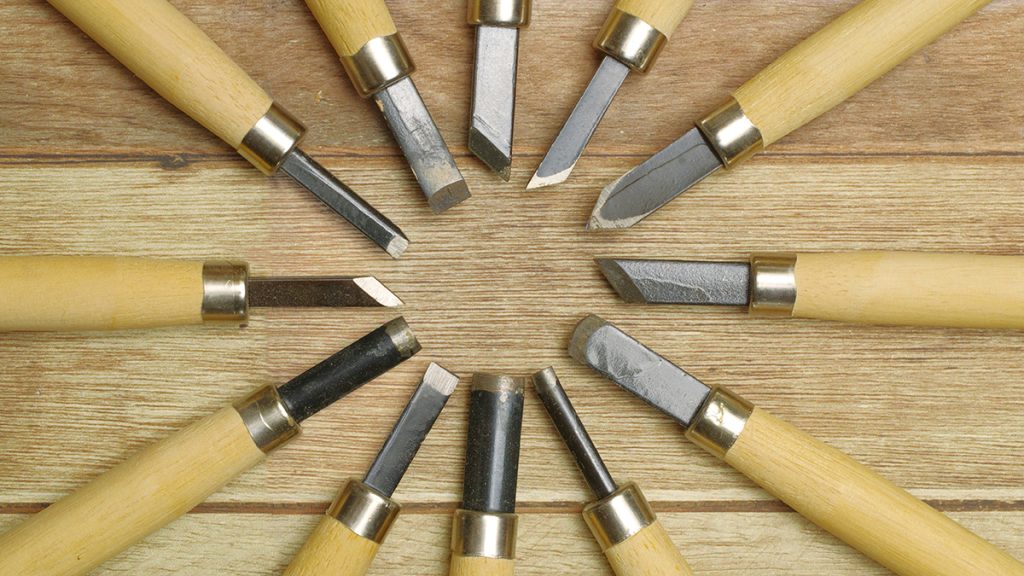
Marking knives are generally divided by their blade profile: Spear-Point (double-bevel blades that work in any direction) and Single-Bevel (flat on one side to register perfectly flush against a layout square).
1. Veritas Striking Knife
Veritas is legendary for engineering premium, no-nonsense hand tools, and this striking knife is an absolute staple for traditional furniture makers.
-
Blade Style: Dual-bevel spear point (0.032 inches thick)
-
Steel Type: High-carbon steel
-
The Highlights: The ultra-thin blade allows you to slip deep into narrow dovetail pin slots where thicker knives bind. Because it features a spear-point tip, you can score clean lines left-to-right or right-to-left without changing your grip or switching tools.
-
Best For: Woodworkers who do a massive amount of hand-cut dovetails and demand a thin, razor-sharp line.
2. Hock Tools MK075 Marking Knife Kit / Blade
If you appreciate old-school tool steel that holds an edge indefinitely, Hock Tools offers an industrial-grade blade that is a favorite among custom shop pros.
-
Blade Style: Traditional single-bevel (available in left or right-handed configurations)
-
Steel Type: High-carbon tool steel (Rc 62-64 hardness)
-
The Highlights: This blade is incredibly stiff, meaning it experiences absolutely zero deflection or bending when cutting through tough hardwood grains like white oak or maple. The flat back of the single bevel registers perfectly flush against your brass layout square or straightedge.
-
Best For: Traditionalists who want maximum rigidity and the option to craft their own custom wooden handle around a premium blade.
3. iGaging Premium Dual-Edge Marking Knife
For budget-conscious woodworkers who still want precision accuracy without paying boutique prices, iGaging offers a fantastic complete tool package.
-
Blade Style: Double-bevel spear point
-
Steel Type: Hardened tool steel
-
The Highlights: Features a beautifully contoured exotic hardwood handle that fits comfortably in the hand like a fine pen. It offers excellent visual clearance near the tip so you can see exactly where the blade meets your layout cross-marks.
-
Best For: Hobbyists looking for an affordable, highly aesthetic out-of-the-box layout tool.
Direct Comparison Matrix
| Model | Blade Profile | Steel Thickness | Reversible Direction? | Best For |
| Veritas Striking Knife | Spear Point (Double Bevel) | Ultra-Thin (~0.03″) | Yes | Tight dovetail pins & versatility |
| Hock Tools MK075 | Single Bevel (Flat Back) | Thick / Heavy (~0.09″) | No (Choose L or R) | Maximum rigidity against squares |
| iGaging Premium | Spear Point (Double Bevel) | Medium (~0.06″) | Yes | Comfort, style, & budget value |
How to Execute a Perfect Layout Knife Line
Using a marking knife incorrectly can cause the wood grain to pull your blade off track. Follow this simple sequence for crisp, flawless lines:
Critical Feature: Single Bevel vs. Double Bevel
The choice between a single-bevel and a double-bevel (spear point) knife comes down to your personal workflow:
-
Single-Bevel knives must be bought specifically for your dominant hand. The completely flat side sits perfectly flush against your reference square, offering absolute accuracy because there is zero gap between the straightedge and the cutting edge.
-
Double-Bevel (Spear-Point) knives are universal. They allow you to pull the knife in either direction, which is critical when transfering lines inside asymmetric cabinet joints or matching pins to tails.
Amazon Disclaimer:
As an Amazon Associate, I earn from qualifying purchases. This means that if you click on certain links within this post and make a purchase, I may receive a small commission at no additional cost to you. This helps support the site and allows us to continue creating high-quality DIY content.