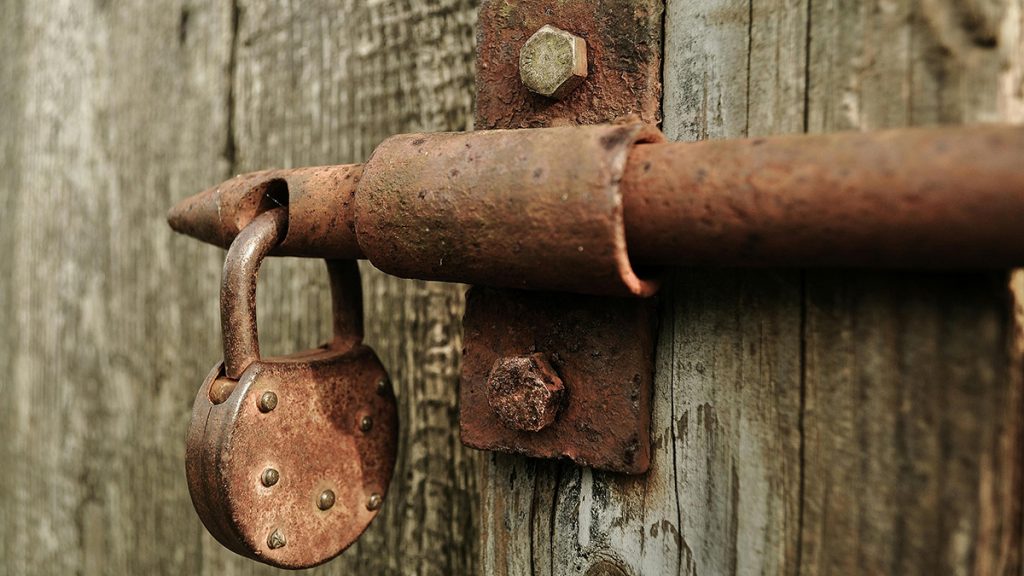
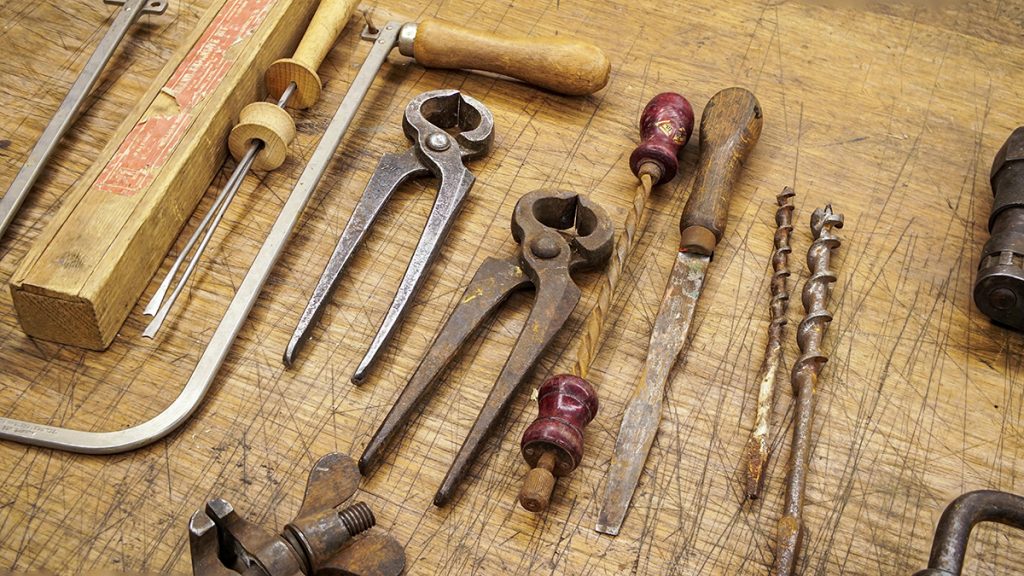
There is something deeply satisfying about rescuing a vintage tool from a rust pile and giving it a second life. A high-carbon steel hand plane from the 1950s often holds an edge better than a brand-new, budget-store version.
Restoration isn’t just about aesthetics; it’s about precision. Rust on the sole of a tool creates friction and inaccuracy. Whether you found a “diamond in the rough” at a garage sale or neglected your own garden shears, here is the ultimate guide to chemical-free and mechanical restoration.
Restoration Supplies Checklist
| Step | Product Type | Recommended Item |
| Cleaning | Rust Remover | Evapo-Rust Super Safe |
| Scrubbing | Abrasive Pads | Non-Woven Scotch-Brite |
| Sanding | Wet/Dry Paper | 3M Pro Grade 220-800 Grit |
| Polishing | Metal Polish | Autosol Metal Polish |
| Protection | Tool Wax | Boeshield T-9 |
Step 1: Deep Soak (The Chemical Bath)
Don’t reach for the wire wheel immediately. Aggressive scrubbing can leave deep scratches in the metal. Instead, submerge the tool in a non-toxic rust remover like Evapo-Rust.
-
Action: Place the disassembled tool parts in a plastic container and cover them completely.
-
Time: Let them soak for 12 to 24 hours. You’ll see the liquid turn black as it “eats” the iron oxide.
-
Result: The rust will literally wash off under a tap with a stiff brush.
Step 2: Surface Prep & Flattening
Once the rust is gone, you’ll likely see “pitting” (tiny craters in the metal). For tools like chisels or planes, the back must be perfectly flat.
-
Action: Use the “scary sharp” method. Attach wet/dry sandpaper to a flat surface like a granite block or a piece of glass.
-
Grit: Start at 220-grit to remove deep pits, then move to 400 and 800 for a smooth finish.
-
Pro Tip: Use mineral spirits as a lubricant to prevent the paper from clogging.
Step 3: Handle Restoration
If the tool has a wooden handle (tote or knob), it likely looks grey and weathered.
-
Action: Lightly sand away the old finish with 150-grit sandpaper. If there are cracks, fill them with a mixture of wood glue and fine sanding dust.
-
Finish: Apply 2–3 coats of Boiled Linseed Oil or a natural wax. This protects the wood and gives it a warm, vintage glow.
Step 4: Sharpening the Edge
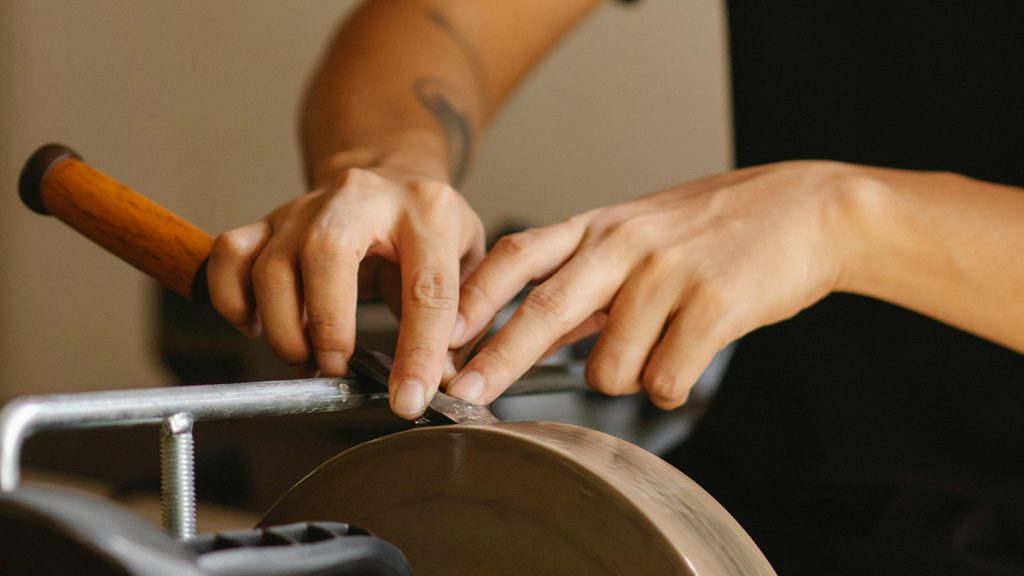
A clean tool is useless if it’s dull. This is the time to regrind the primary bevel.
-
Action: Use a honing guide to maintain a consistent angle (usually $25°$ or $30°$).
-
Stones: Progress through your diamond stones or water stones until you can easily shave hair with the blade.
-
Pro Tip: Don’t forget to “back-off” the burr on your finest stone for a razor-sharp finish.
Step 5: Final Protection
The “naked” steel is now highly vulnerable to moisture from your hands or the air.
-
Action: Wipe all metal surfaces with a microfiber cloth and apply a protective barrier.
-
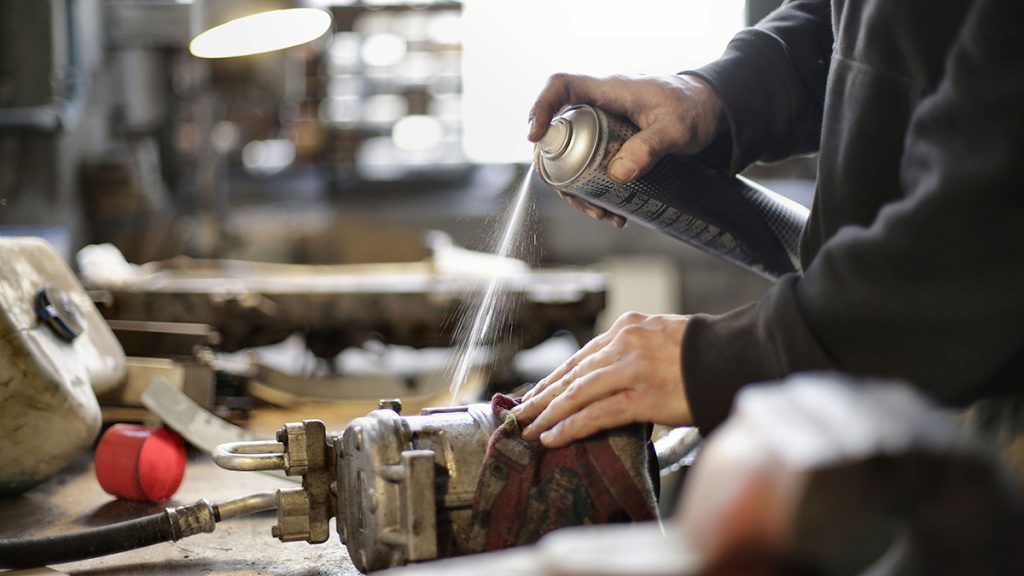
Product: For tools you use daily, Paste Wax is great. For tools that might sit for a while, a spray of Boeshield T-9 creates a more durable waxy film.
3 Restoration Mistakes to Avoid
-
Over-Restoring: If a tool has a beautiful “patina” (a dark, aged look that isn’t active rust), consider leaving it. Removing it can actually lower the value of antique tools.
-
Using Power Grinders: High-speed bench grinders create heat that can “draw the temper” (soften the steel). If the metal turns blue, it will no longer hold a sharp edge.
-
Forgetting the Screws: Always clean the threads of the adjustment screws. A drop of oil on the threads makes the tool feel brand new.
Final Verdict
-
For safe and easy rust removal, use Evapo-Rust.
-
For a mirror-finish on steel, use Autosol after sanding.
-
For long-term storage, always shield the metal with T-9.
Read too: How to Clean Saw Blades: Best Cleaners to Remove Pitch
Disclaimer: As an Amazon Associate, I earn from qualifying purchases. Conquer the elements!