In the shop, we often speak in fractions, but wood doesn’t always follow the rules. Humidity, planing, and manufacturing variances mean that a “one-inch” board is rarely exactly one inch. For precision joinery—like dovetails or inlay work—guessing with a ruler isn’t enough.
A digital caliper allows you to measure thickness, internal gaps, and hole depths down to 0.001 inches (or even fractions). Whether you’re calibrating your thickness planer or checking the diameter of a dowel, these are the top 5 digital calipers on Amazon for woodworkers who demand accuracy.
Quick Comparison Table
| Model | Best For | Accuracy | Construction |
| Mitutoyo 500-196-30 | The Pro Standard | $\pm 0.001″$ | Stainless Steel |
| iGaging OriginCal | Best Value / Shop | $\pm 0.001″$ | Stainless Steel |
| Vinca DCLA-0605 | Best Budget Steel | $\pm 0.001″$ | Polished Steel |
| Neiko 01407A | Fractional Reading | $\pm 0.001″$ | Stainless Steel |
| Adoric Digital Caliper | Casual DIY / Price | $\pm 0.01″$ | Carbon Fiber |
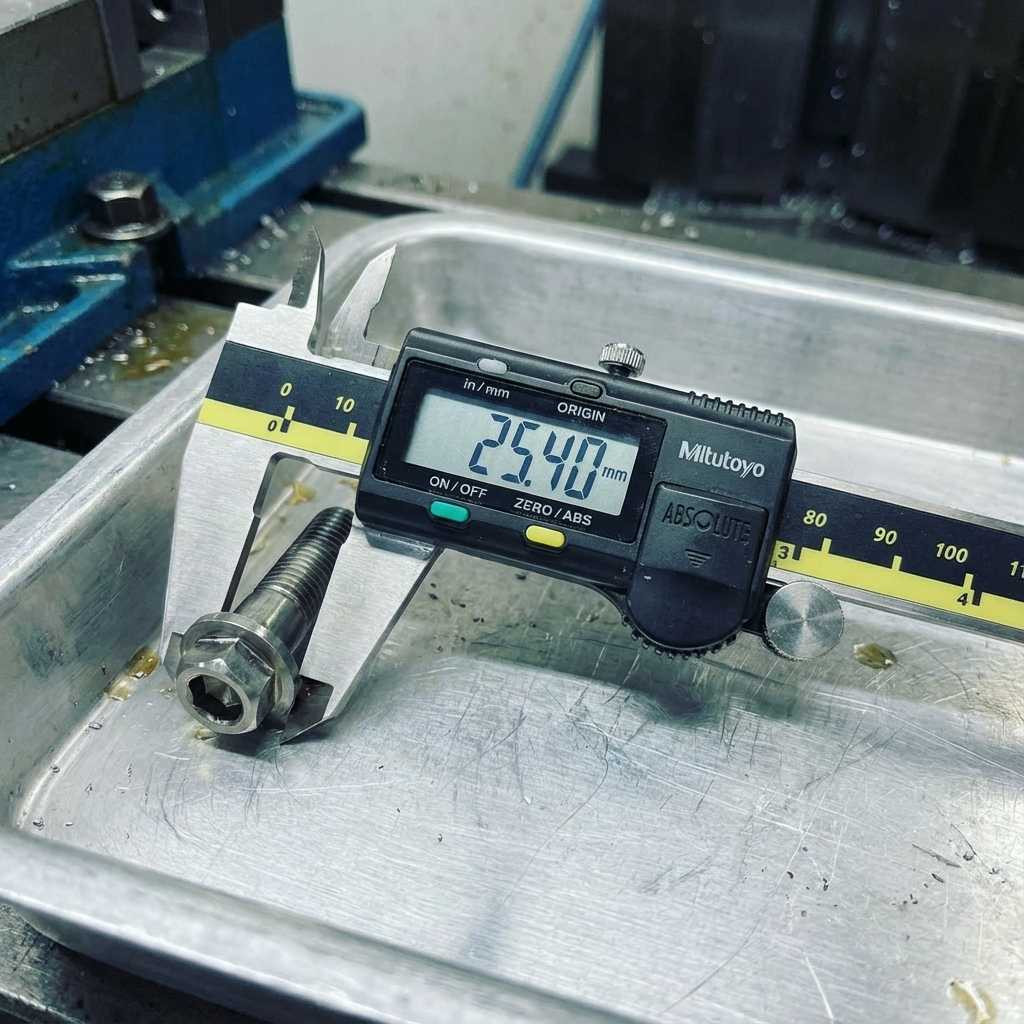
1. The Gold Standard: Mitutoyo 500-196-30 (AOS)
If you ask any professional machinist or high-end furniture maker, Mitutoyo is the name they trust. The AOS (Advanced Onsite Sensor) technology makes this caliper resistant to the dust and oil common in a woodworking shop.
Why it’s perfect for woodworkers: Unlike cheap calipers that “forget” their zero-point if you move them too fast, the Mitutoyo uses an Absolute encoder. You can pick it up after six months, and it will still know exactly where it is. It is a “buy once, cry once” tool that will last a lifetime.
-
Pros: Lab-grade accuracy, incredible battery life, dust-resistant sensor.
-
Cons: Most expensive option; does not show fractions (decimal only).
2. Best Value for Woodworkers: iGaging Absolute Origin
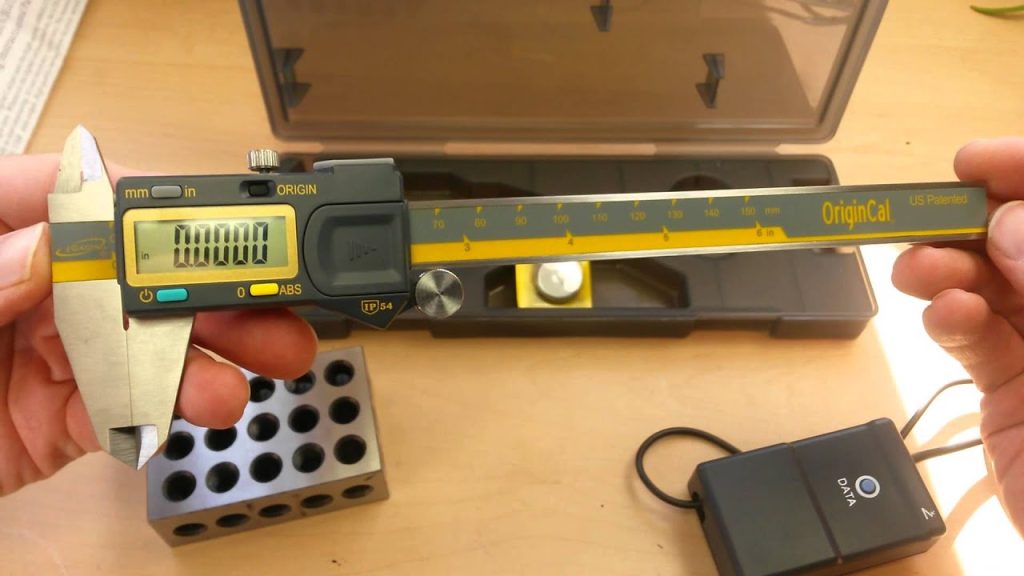
The iGaging OriginCal has become the “internet favorite” because it offers Mitutoyo-level features at a third of the price.
Why it’s perfect for woodworkers: It features the same Absolute sensor technology as the premium brands, meaning it remembers its zero position even when powered off. It’s built from hardened stainless steel and feels much more substantial than “bargain” Amazon brands.
-
Pros: Excellent accuracy for the price, IP54 splash/dust resistance, large display.
-
Cons: The slide isn’t quite as “silky” as a Mitutoyo.
3. Best for Beginners: Neiko 01407A (Fractional)
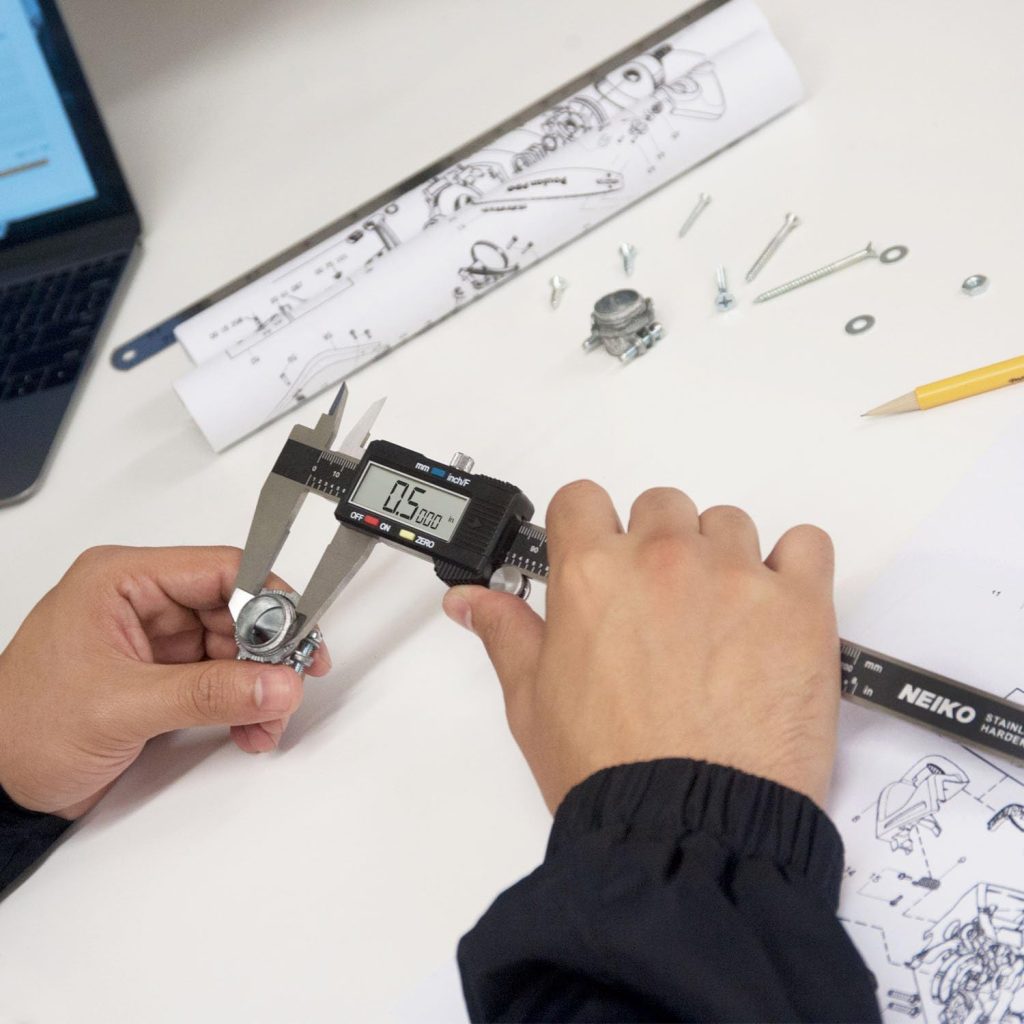
Most calipers give you measurements in Millimeters or Decimals (e.g., $0.500″$). The Neiko includes a third mode: Fractions.
Why it’s essential: If you see a measurement of $0.4375″$, your brain might not immediately realize that is $7/16$. The Neiko does the math for you, displaying the fraction directly on the screen. This is a massive time-saver when you’re trying to find the right drill bit.
-
Pros: Easy fractional reading, very affordable, includes a spare battery.
-
Cons: Lacks the “Absolute” sensor (you must zero it every time you turn it on).
4. Best Budget Steel: Vinca DCLA-0605
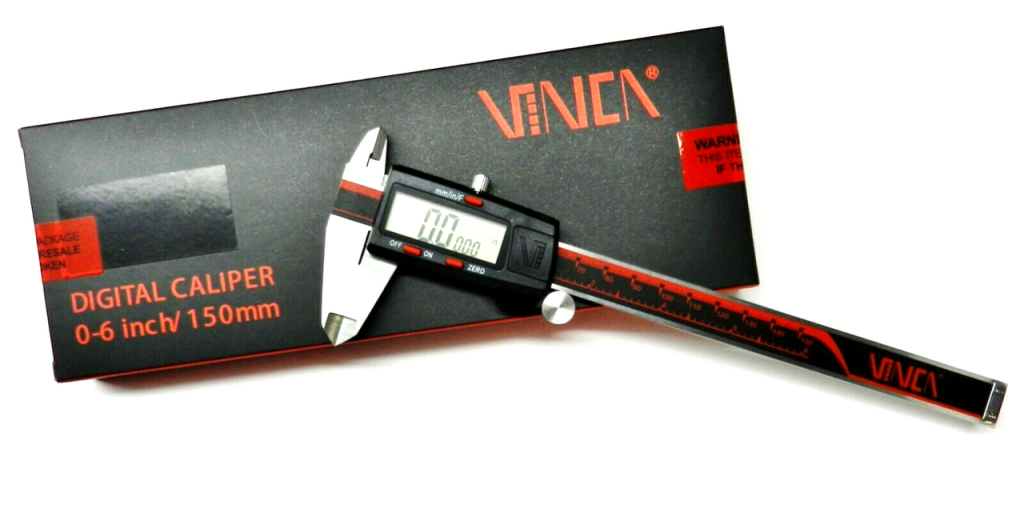
If you want a stainless steel tool but are on a strict budget, the Vinca is the “best bang for your buck” on the market in 2026.
Why it’s perfect for woodworkers: It’s surprisingly well-machined for a budget tool. It feels smooth and provides repeatable measurements. It’s perfect for keeping in your apron pocket for quick checks at the lumber yard.
-
Pros: Stainless steel construction, very cheap, higher accuracy than plastic models.
-
Cons: High battery drain; make sure to turn it off manually.
5. The “No-Scratch” Choice: Adoric Carbon Fiber Caliper
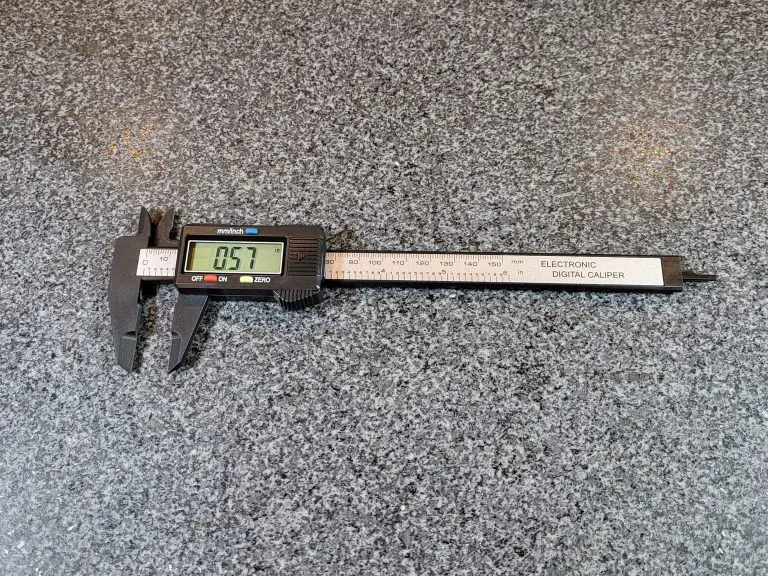
Most calipers are steel, which can occasionally scratch delicate finishes or soft woods like Pine. The Adoric is made from a carbon fiber composite.
Why it’s perfect for woodworkers: Because it’s non-metallic, it won’t mar your workpiece. It’s also significantly lighter than steel models. While it isn’t accurate enough for engine building, it is plenty accurate for general woodworking tasks where “within $1/64$” is the goal.
-
Pros: Lightweight, won’t scratch wood, extremely inexpensive.
-
Cons: Lower precision ($\pm 0.01″$); the jaws can flex if you squeeze too hard.
3 Tips for Perfect Measurements
-
The “Thumbwheel” Secret: Don’t squeeze the jaws shut with your whole hand. Use the thumbwheel to apply gentle, consistent pressure. Squeezing too hard can actually flex the tool and give you a false reading.
-
Clean the Jaws: Even a single speck of sawdust trapped between the jaws will throw your measurement off by $0.005$ to $0.01$ inches. Wipe the jaws clean with your fingers before every measurement.
-
Check for “Daylight”: To ensure your measurement is square, close the jaws on your board and hold the tool up to a light. If you see light leaking through the top or bottom of the jaws, the caliper is tilted and your reading is wrong.
Final Verdict
-
For professional accuracy and longevity, invest in the Mitutoyo 500-196-30.
-
For the best balance of price and features, get the iGaging OriginCal.
-
For converting decimals to fractions instantly, the Neiko 01407A is the winner.
Read too: Best Tape Measures for Woodworkers: Top 5 Fractional-Read Reviews