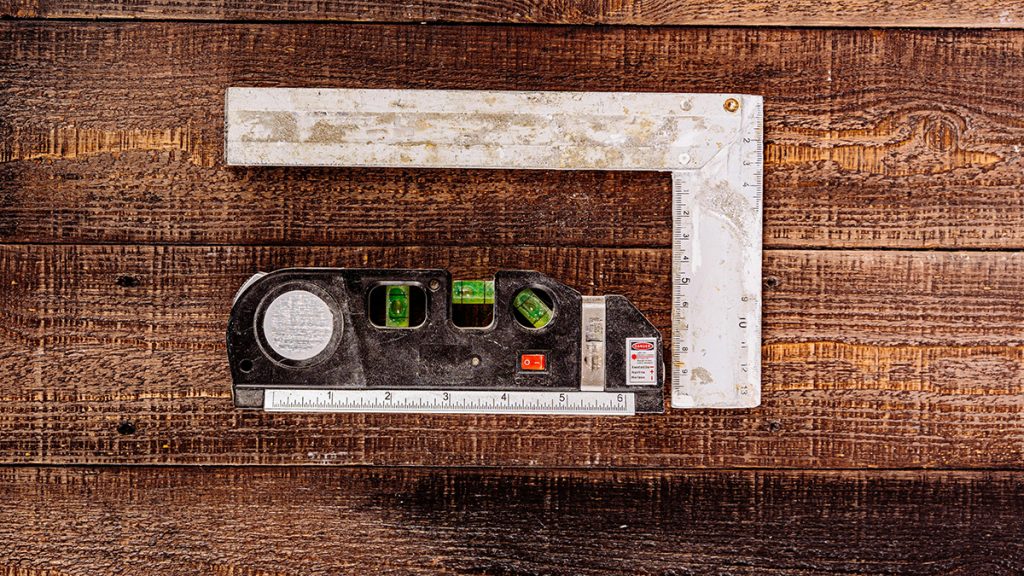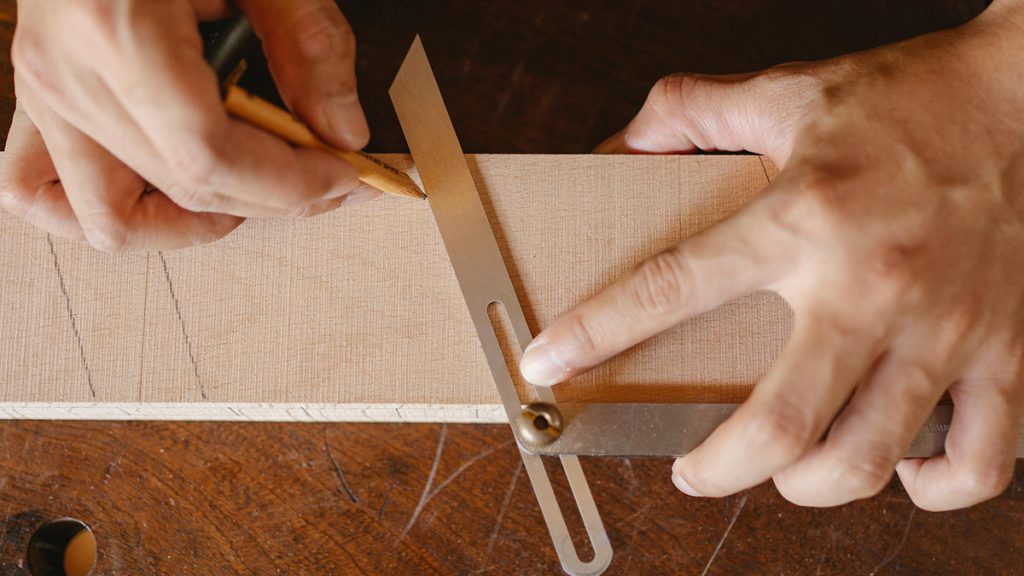
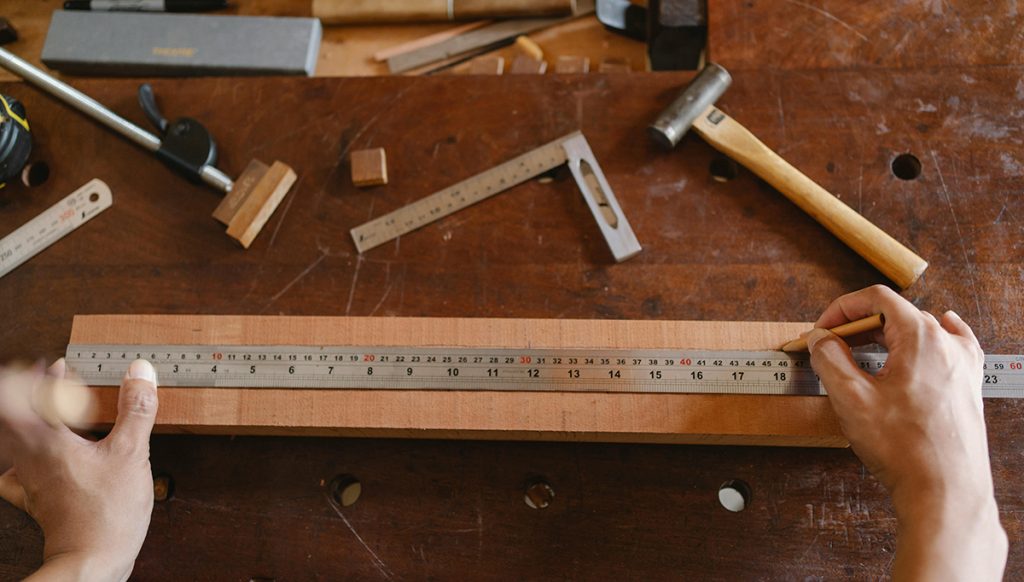
A standard plastic or thin metal ruler from a stationery store is fine for drawing, but in the workshop, you need a “machinist-grade” tool. A precision ruler should be dead-accurate from the very end (zero-point), while a straight edge is used to verify that your jointer tables or table saw tops are perfectly flat.
Investing in high-end layout tools is the fastest way to elevate your craftsmanship from “DIY” to “Professional.” Here are the top 5 precision measuring tools on Amazon.
Precision Measuring Tools Comparison
| Tool | Type | Material | Key Feature |
| Starrett C636 | 6-Inch Ruler | Hardened Steel | Spring-tempered Finish |
| Woodpeckers Cal-zilla | 12/24-Inch Rule | Aluminum | Beveled Marking Edge |
| Shinwa Rigid Rule | Metric/Imperial | Stainless Steel | Hard Chrome Non-Glare |
| JessEm Precision Rule | 12-Inch Ruler | 301 Stainless | Patented Flex Grip |
| Taytools Machinist Edge | 24-Inch Straight | Steel | Grade 0 Accuracy |
1. The Gold Standard: Starrett C636 Machinist Ruler
Starrett has been the king of precision since 1880. Their 6-inch “pocket” rule is the tool you will find in the apron of every master woodworker.
Why it’s perfect for woodworkers:
It is spring-tempered, meaning it can flex slightly but will always snap back to being perfectly straight. The markings are photo-etched and then filled with black for maximum contrast. It starts at exactly “0” at the edge, allowing you to use it for router bit depth setup.
-
Pros: Indestructible, legendary accuracy, easy-to-read “quick-reading” graduations.
-
Cons: Premium price for a small tool.
2. The High-Tech Choice: Woodpeckers Cal-zilla Woodworking Rule
New for 2026, the Cal-zilla is designed specifically for the unique needs of woodworkers who need to mark lines with a mechanical pencil.
Why it’s essential:
Unlike flat machinist rulers, the Cal-zilla has a beveled edge that brings the scale right down to the wood’s surface. This eliminates “parallax error”—the tiny visual shift that happens when you look at a scale from an angle. The anodized “Woodpeckers Red” finish is not just for looks; it resists corrosion from sweat and glue.
-
Pros: No parallax error, center-finding scale on the back, made in the USA.
-
Cons: Aluminum is softer than steel and can be nicked by a marking knife.
3. Best for Bright Shops: Shinwa Rigid Stainless Rule
If your workshop has bright overhead LED lights, you know how hard it is to read a shiny metal ruler. The Japanese-made Shinwa solves this with a “hard chrome” matte finish.
Why it’s perfect for woodworkers:
The non-glare surface is incredibly easy on the eyes. The markings are etched deep into the steel, so they won’t wear off even after years of sliding across sandpaper. It’s the best “workhorse” ruler for daily layout tasks.
-
Pros: Zero glare, very affordable, available in Metric/Imperial combos.
-
Cons: Lacks the “heft” of a Starrett.
4. Most Innovative: JessEm Stainless Precision Rule
JessEm took a classic tool and added a “Patented Flex Grip” on the back. This is a game-changer for marking long lines.
Why it’s essential:
Standard metal rulers love to slide around on smooth, planed wood. The JessEm rule features small tabs on the back that “grip” the wood when you apply light pressure. This allows you to scribe long layout lines for shelves or table legs without the ruler shifting mid-cut.
-
Pros: Anti-slip technology, heavy-duty 301 stainless steel, laser-engraved.
-
Cons: The grip tabs can collect sawdust and need occasional cleaning.
5. The Setup Essential: Taytools 24-Inch Machinist Straight Edge
This isn’t a ruler for measuring; it’s a reference tool for “flatness.” If you suspect your benchtop jointer isn’t cutting straight, this is what you use to find the problem.
Why it’s perfect for woodworkers:
It is ground to “Grade 0” accuracy, meaning it is straight to within $0.001$ of an inch over its entire length. Use it with feeler gauges to check for “dips” in your tool tables or to ensure your glued-up panels are perfectly co-planar.
-
Pros: Extremely accurate, heavy steel prevents bowing, hanging hole for storage.
-
Cons: Heavy and should never be dropped; not for taking measurements.
3 Rules for Precision Layout
-
Trust the End: High-quality rulers have “ground ends.” This means you can stand the ruler vertically to set the height of your table saw blade with $100\%$ confidence.
-
Avoid the “Pencil Shadow”: When marking, use a 0.5mm mechanical pencil or a marking knife. A standard wooden pencil is too thick and changes shape as you use it, leading to “drifting” measurements.
-
Clean Your Tools: Wood resins and dried glue can build up on the edges of your rulers. Wipe them down with a bit of mineral spirits to keep the surface smooth and the markings clear.
Final Verdict
-
For pocket-sized perfection, you can’t beat the Starrett C636.
-
For the best marking experience, go with the Woodpeckers Cal-zilla.
-
For machine setup and maintenance, every shop needs a Taytools Straight Edge.
Read too: Best Marking Gauges: Wheel vs. Pin Styles
Disclaimer: As an Amazon Associate, I earn from qualifying purchases. Drink clean, hike on!