In woodworking, a pencil line is often too thick. A standard 0.5mm lead might seem precise, but when you’re fitting fine joinery, that half-millimeter can be the difference between a seamless joint and a sloppy gap. This is where a marking knife comes in.
A marking knife doesn’t just draw a line; it severs the wood fibers, creating a physical notch that guides your chisel or saw blade. If you want to take your craftsmanship to the professional level, a high-quality knife is the first tool you should reach for.
We’ve reviewed the top 5 marking knives on Amazon, from simple starter tools to high-end blades for master craftsmen.
Quick Comparison Table
| Model | Best For | Blade Style | Edge |
| HOCK Tools (K125) | Overall Best | Spear Point | Double Bevel |
| iGaging Premium | Best Value | Striker Style | Single Bevel |
| X-Acto No. 1 | Best Budget | Hobby Blade | Single Bevel |
| Narex (822301) | Traditional Work | Spear Point | Double Bevel |
| CROWN 185 | Classic Feel | Flat Blade | Single Bevel |
1. Overall Best: HOCK Tools Marking Knife (K125)
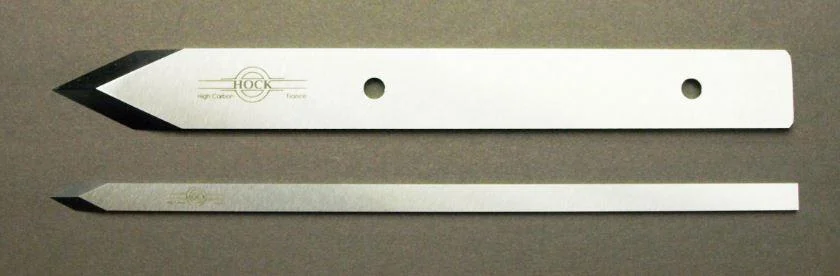
HOCK Tools is legendary among hand-tool enthusiasts for their superior steel. This knife isn’t just a tool; it’s a piece of high-carbon surgery-grade equipment for your woodshop.
Why it’s perfect for woodworkers:
The spear-point design is the most versatile. Because it is double-beveled, it works perfectly for both left-handed and right-handed users. The high-carbon steel is famously easy to sharpen to a “scary sharp” edge and stays that way through hundreds of marks in tough oak or maple.
-
Pros: Exceptional steel quality, slim profile for tight dovetails, easy to resharpen.
-
Cons: Comes as a “blade only” or with simple wooden scales; you might want to customize the handle.
2. Best Value: iGaging Premium Marking Knife
If you want a professional-looking tool without the “boutique” price tag, the iGaging Premium is a top seller on Amazon for a reason.
Why it’s perfect for woodworkers:
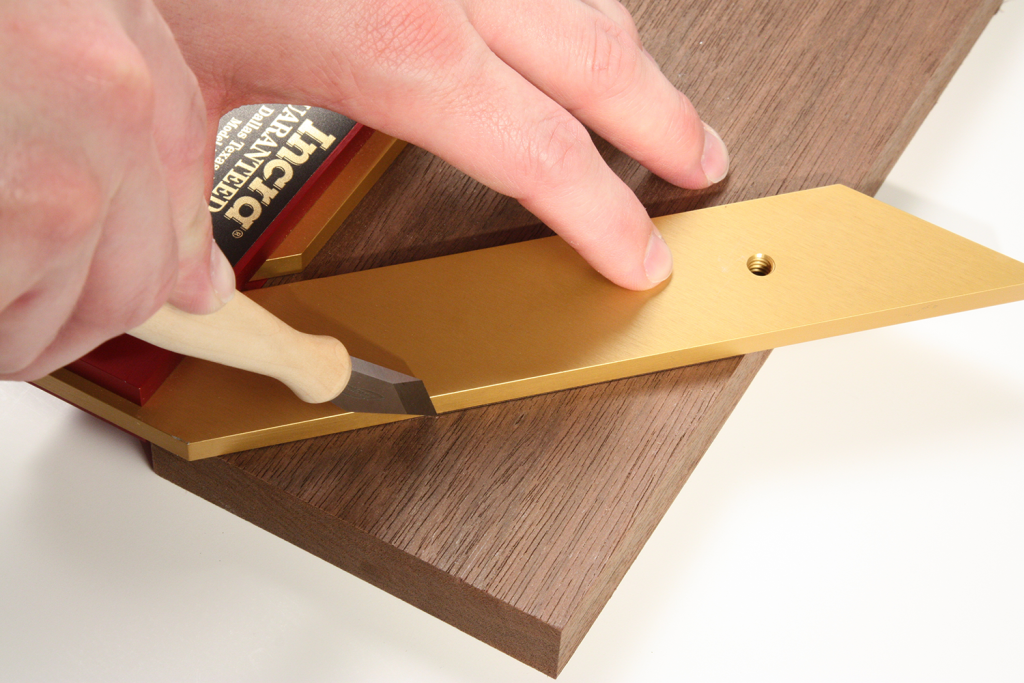
It features a comfortable, ergonomic wooden handle and a very thin, flat blade. The single-bevel edge allows you to press the flat side of the knife directly against your square or template, ensuring the mark is exactly where it needs to be with zero offset.
-
Pros: Beautiful hardwood handle, very thin blade for precision, excellent price-to-quality ratio.
-
Cons: The factory edge usually needs a quick honing on a stone before the first use.
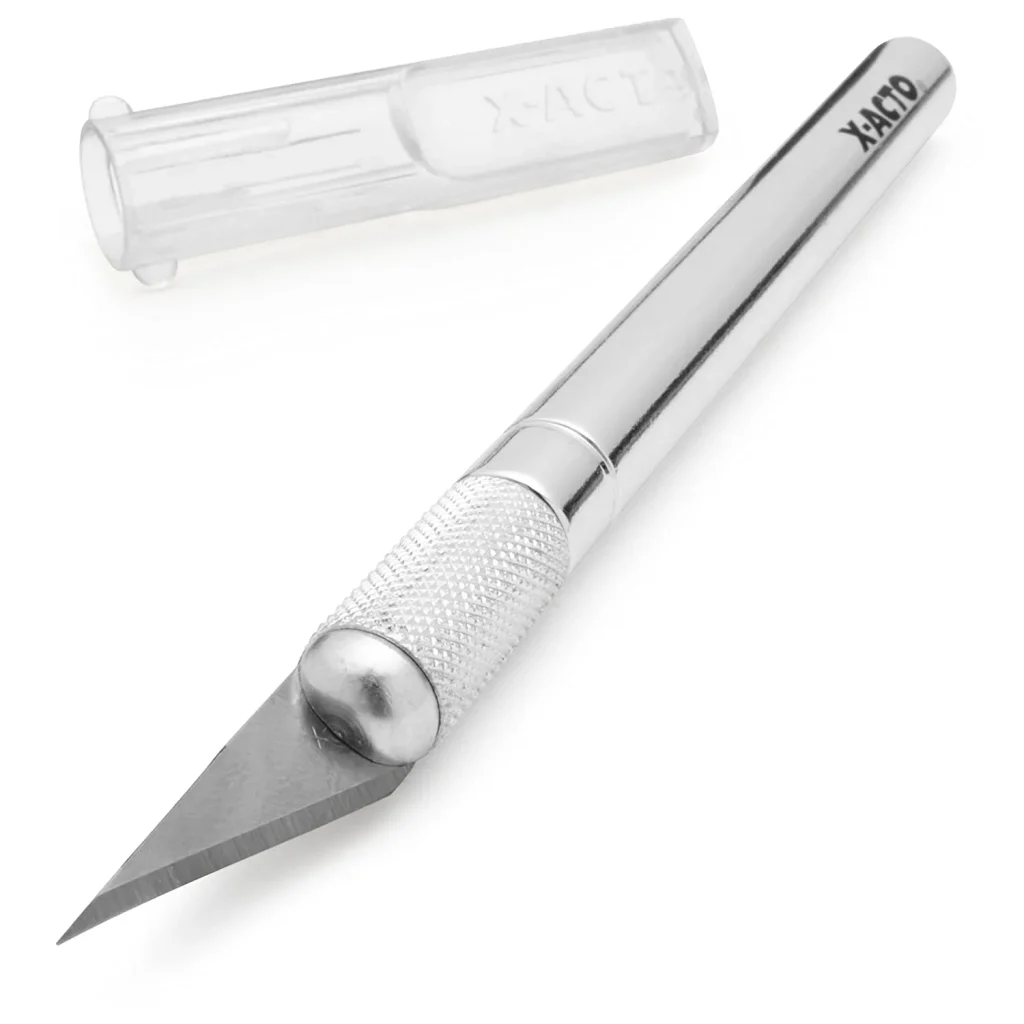
3. Best Budget Choice: X-Acto No. 1 Precision Knife
Many beginner woodworkers start with a classic X-Acto knife. While not a “dedicated” woodworking tool, it is surprisingly effective for light layout work.
Why it’s perfect for woodworkers:
It is incredibly cheap and the blades are replaceable. If you hit a hidden nail or drop it on the concrete floor, you just swap the tip. It’s perfect for marking softwoods and thin veneers where a heavy knife might wander.
-
Pros: Extremely affordable, replaceable blades, found in every hardware store.
-
Cons: The round handle can roll off your workbench; the blades can flex under heavy pressure.
4. Best Traditional Style: Narex Spear Point Marking Knife
Like their chisels, Narex marking knives offer European quality at a very reasonable price. This is a robust tool designed for daily shop use.
Why it’s perfect for woodworkers:
The large, flat handle prevents the knife from rolling off your bench—a common frustration with round tools. The spear-point blade is thick enough to handle “heavy” marking in rough lumber but tapers to a fine point for detail work.
-
Pros: Solid manganese steel, stable flat handle, dual-bevel versatility.
-
Cons: The handle is quite large, which might feel bulky for people with smaller hands.
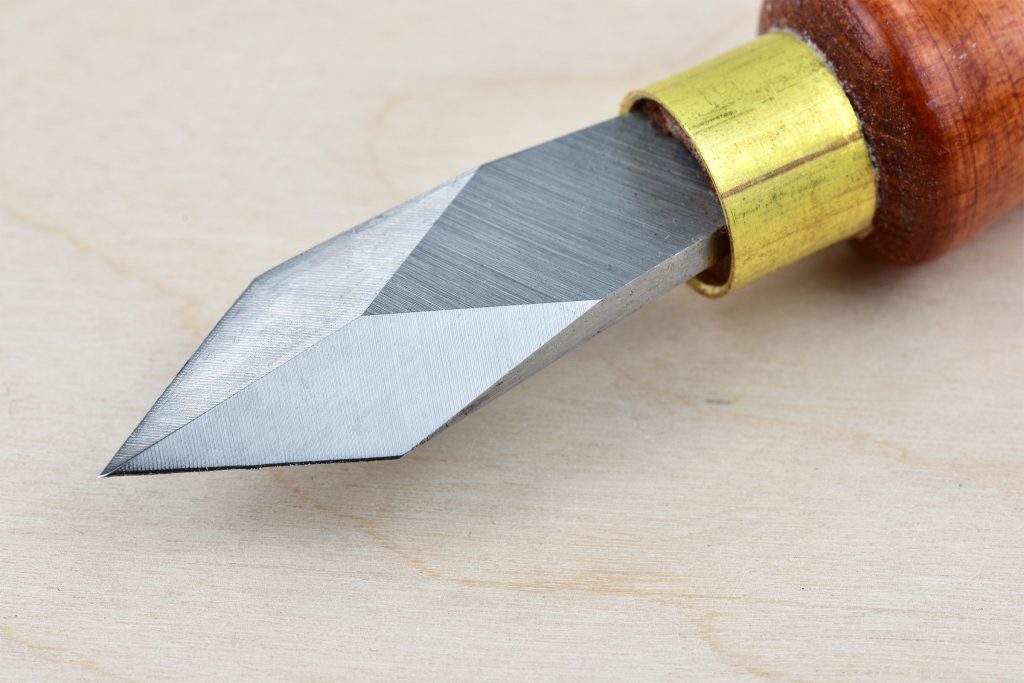
5. The Classic “Striker”: Crown 185 Marking Tool
The Crown 185 is a traditional English-style marking knife. It looks like something you would find in an 18th-century cabinetmaker’s chest.
Why it’s perfect for woodworkers:
It features a rosewood handle and brass ferrule. The blade is short and stiff, giving you immense “feedback” from the wood grain. It’s a specialized tool that excels at marking hinges and hardware recesses where you need to apply vertical pressure.
-
Pros: Beautiful rosewood and brass aesthetics, very stiff blade, classic craftsmanship.
-
Cons: Single-bevel only, so you may need to adjust your grip depending on which side of the line you are marking.
Buyer’s Guide: Single Bevel vs. Double Bevel
-
Single Bevel: One side is flat, the other is angled. You press the flat side against your ruler. This is the most accurate but requires you to hold the knife in a specific direction.
-
Double Bevel (Spear Point): Both sides are angled. It’s more versatile and works in any direction, but you have to be careful to “tilt” it slightly to ensure the tip stays flush against your square.
-
Thickness: For dovetails, you want a very thin blade (under 1mm). For general layout on construction lumber, a thicker, sturdier blade is better.
Final Verdict
-
For the ultimate precision in fine furniture, the HOCK Tools K125 is the professional choice.
-
For a great all-around shop knife, the iGaging Premium offers the best value.
-
If you are just starting out, don’t overthink it—grab an X-Acto No. 1 and start making marks.