Woodworking would be easy if every corner was a perfect $90$ degrees. But in the real world—especially when doing trim work in older homes or building custom furniture—you’ll constantly encounter “odd” angles.
A T-Bevel (or Sliding Bevel) allows you to “lock in” an existing angle and transfer it directly to your miter saw or table saw without ever needing to do the math. Whether you are a traditionalist who loves the feel of brass and rosewood or a tech-focused woodworker who wants a digital readout, here are the top 5 T-Bevels on Amazon for precision layout.
T-Bevel Comparison Table
| Model | Type | Blade Material | Lock Mechanism |
| Shinwa 78218 (10″) | Professional Analog | Stainless Steel | Top-Screw Lock |
| General Tools 828 | Digital / LCD | Stainless Steel | Center Nut |
| Johnson Level 1908 | Heavy-Duty | Aluminum / Steel | Side-Lock Lever |
| Crown 230 (7.5″) | Traditional Luxury | Rosewood / Brass | End-Screw |
| Kreg Multi-Mark | Multi-Purpose | High-Impact Poly | Slide Lock |
1. The Professional Choice: Shinwa 78218 (10-Inch)
Japanese-made Shinwa tools are legendary for their zero-tolerance machining. This T-bevel is the “go-to” for furniture makers who need a tool that won’t budge once locked.
Why it’s perfect for woodworkers:
The locking screw is located at the top of the handle, meaning it stays out of the way when you’re trying to lay the tool flat against a saw fence. The stainless steel blade is thick and doesn’t flex, ensuring that the angle you measure is exactly the angle you cut.
-
Pros: Indestructible build quality, very low profile, stays locked under pressure.
-
Cons: More expensive than standard hardware store brands.
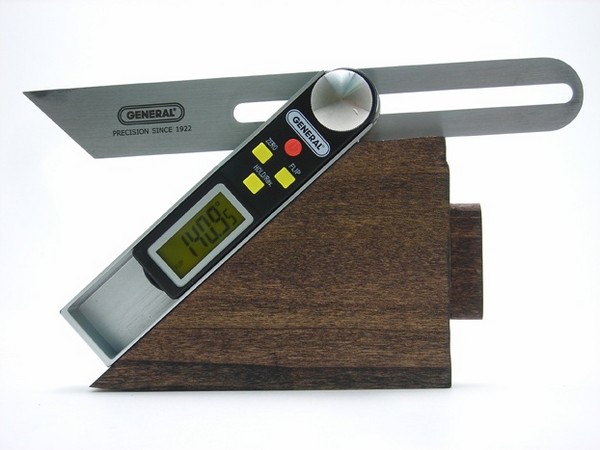
2. Best for Complex Math: General Tools 828 Digital Bevel
If you hate calculating “miter vs. bevel” angles for crown molding, this digital version is a lifesaver.
Why it’s essential:
It combines the physical sliding blade of a T-bevel with a high-accuracy digital sensor. You can lock an angle on a wall and immediately read “$22.5°$” on the LCD screen. It also features a “Zero” button, allowing you to measure relative angles between two different surfaces.
-
Pros: Large LCD screen, extremely accurate ($\pm 0.1°$), stainless steel blade.
-
Cons: Requires a battery; not as “shop-tough” as a solid steel tool.
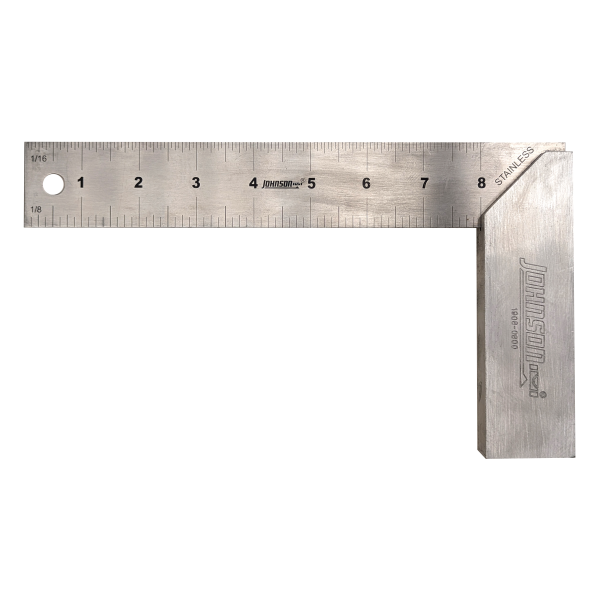
3. Best for Rough Construction: Johnson Level 1908
Johnson is known for tools that can survive a 10-foot drop onto concrete. Their 8-inch T-bevel is built for the jobsite.
Why it’s perfect for woodworkers:
It features a heavy-duty aluminum handle with a “structured grip” that’s easy to hold even when wearing work gloves. The locking lever is oversized, so you can tighten it with one hand while holding your project with the other.
-
Pros: Very affordable, high-contrast markings, heavy-duty lever lock.
-
Cons: The aluminum handle can be a bit bulky for fine jewelry box work.
4. The Heirloom Choice: Crown 230 Rosewood & Brass
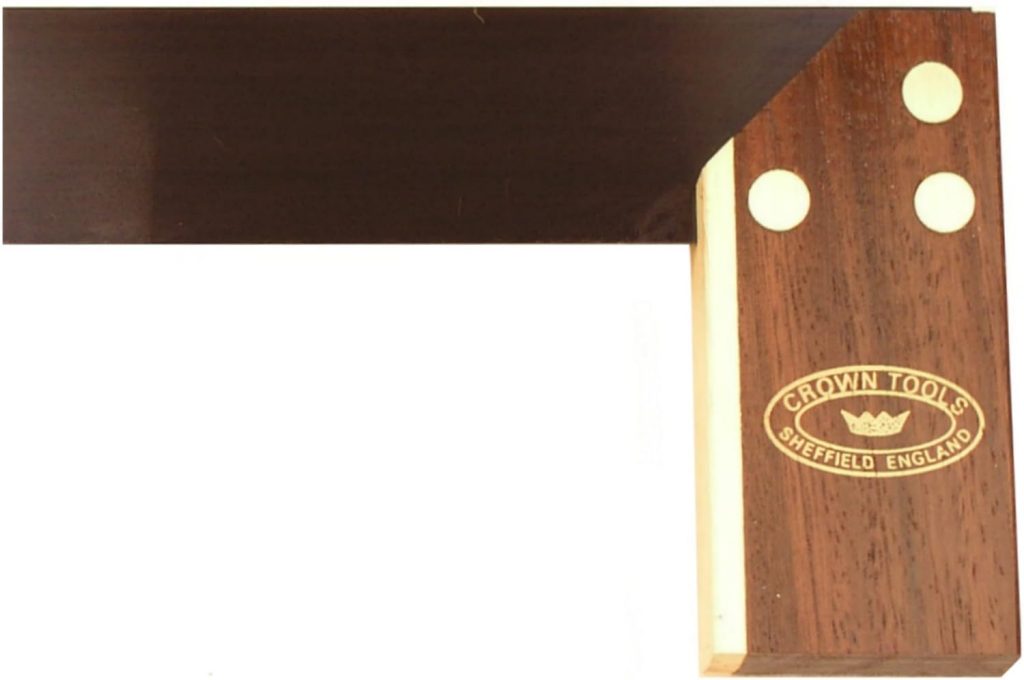
For those who appreciate the history of woodworking, Crown (made in Sheffield, England) produces tools that look as good as they perform.
Why it’s essential:
Made from plantation-grown Rosewood and solid brass, this tool feels like an extension of your craft. It is smaller (7.5 inches), making it perfect for layout work on dovetails or small furniture components. It is the perfect gift for a woodworker who values traditional aesthetics.
-
Pros: Beautiful craftsmanship, very lightweight, excellent hand-feel.
-
Cons: Brass is a soft metal; it can dent if dropped on a hard shop floor.
5. Most Versatile: Kreg Multi-Mark (KMA2900)
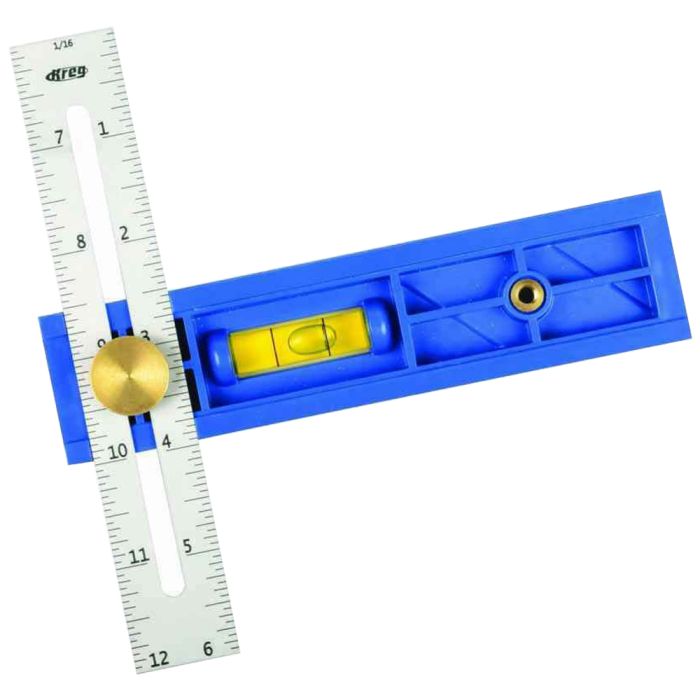
While not a traditional T-bevel, the Kreg Multi-Mark is the “Swiss Army Knife” of measuring tools.
Why it’s perfect for woodworkers:
It features a sliding blade that can be set to $90°$, $45°$, or used as a sliding bevel for custom angles. It even has a built-in scale for measuring reveal gaps on cabinet doors. It’s the tool you’ll find yourself reaching for 20 times a day.
-
Pros: 3 tools in one, extremely portable, very inexpensive.
-
Cons: The plastic body isn’t as rigid as steel for ultra-precise long-distance angles.
3 Tips for Perfect Angle Transfers
-
The “Paper” Trick: Before locking your T-bevel against a saw blade, place a thin piece of paper between the tool and the blade. If the paper is held tight but doesn’t tear, your angle is perfect.
-
Verify Twice: Angles can be “deceiving.” Always measure the angle on the left side and the right side of a miter joint to see if they are symmetrical before you start cutting your expensive Walnut or Oak.
-
Oil the Pivot: A T-bevel that is hard to move is a T-bevel that is hard to use. Apply a single drop of machine oil to the pivot screw once a year to keep the motion silky smooth.
Final Verdict
-
For maximum precision and shop longevity, get the Shinwa 78218.
-
For tricky home renovations, the General Tools Digital Bevel is the winner.
-
For budget-friendly versatility, you can’t beat the Kreg Multi-Mark.
Read too: Best Woodworking Squares: Speed, Try, and Combination