In woodworking, sanding a straight edge is easy. Sanding a curve is where the skill—and the frustration—lies. Whether you are building an acoustic guitar, a curved jewelry box, or intricate toys for children, a spindle sander is the only tool that can reach into tight “valleys” and smooth them perfectly.
The magic of an oscillating sander is the vertical stroke. By moving the abrasive drum up and down while it spins, the machine prevents “burn marks” on dense hardwoods like Maple or Cherry. Here are the top 5 spindle sanders on Amazon that will save you hours of hand-sanding in 2026.
Spindle Sander Comparison Table
| Model | Type | Motor Power | Stroke Length |
| WEN AT6535 (6.5 Amp) | Heavy-Duty Benchtop | 1/2 HP | 1-Inch |
| Triton TSPST450 | Dual: Spindle & Belt | 3.5 Amp | 5/8-Inch |
| Grizzly G0739 | Industrial Benchtop | 1/2 HP | 5/8-Inch |
| Ridgid EB4424 | Professional Hybrid | 5.0 Amp | 3/4-Inch |
| POWERTEC OS1000 | Budget Entry | 2.6 Amp | 1/2-Inch |
1. Best Overall Value: WEN AT6535 6.5-Amp
WEN has become a dominant force in the benchtop tool market, and their 6.5-amp spindle sander is the perfect example of why. It offers professional-grade power for a hobbyist price.
Why it’s perfect for woodworkers:
It comes with 6 different spindle sizes (from $1/2$ inch to $3$ inches), allowing you to sand everything from a tiny fretwork detail to a large table leg. The heavy cast iron table provides a massive, stable surface that won’t vibrate during heavy use.
-
Pros: Powerful motor, 2,000 RPM speed, excellent dust collection port.
-
Cons: The motor is quite loud compared to the Grizzly or Ridgid models.
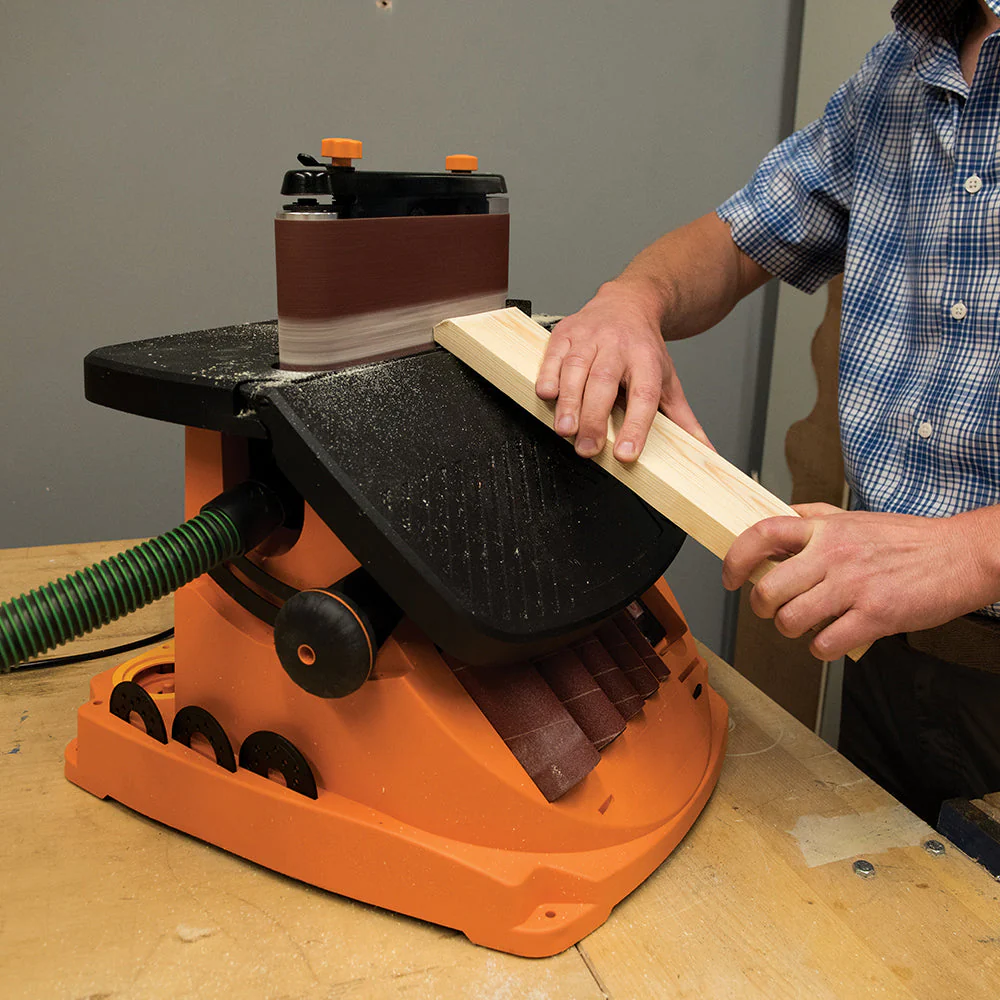
2. Most Versatile: Triton TSPST450 (Spindle & Belt)
Why buy two machines when you can have one? The Triton TSPST450 is a hybrid that quickly converts from an oscillating spindle sander to an oscillating belt sander.
Why it’s essential:
The belt attachment is a game-changer for sanding long, external curves (like the edge of a circular tabletop). The oscillating action works for both the spindles and the belt, giving you the smoothest possible finish on every part of your project.
-
Pros: 2-in-1 design, very compact for small shops, includes all accessories.
-
Cons: The plastic body feels less “industrial” than solid cast iron models.
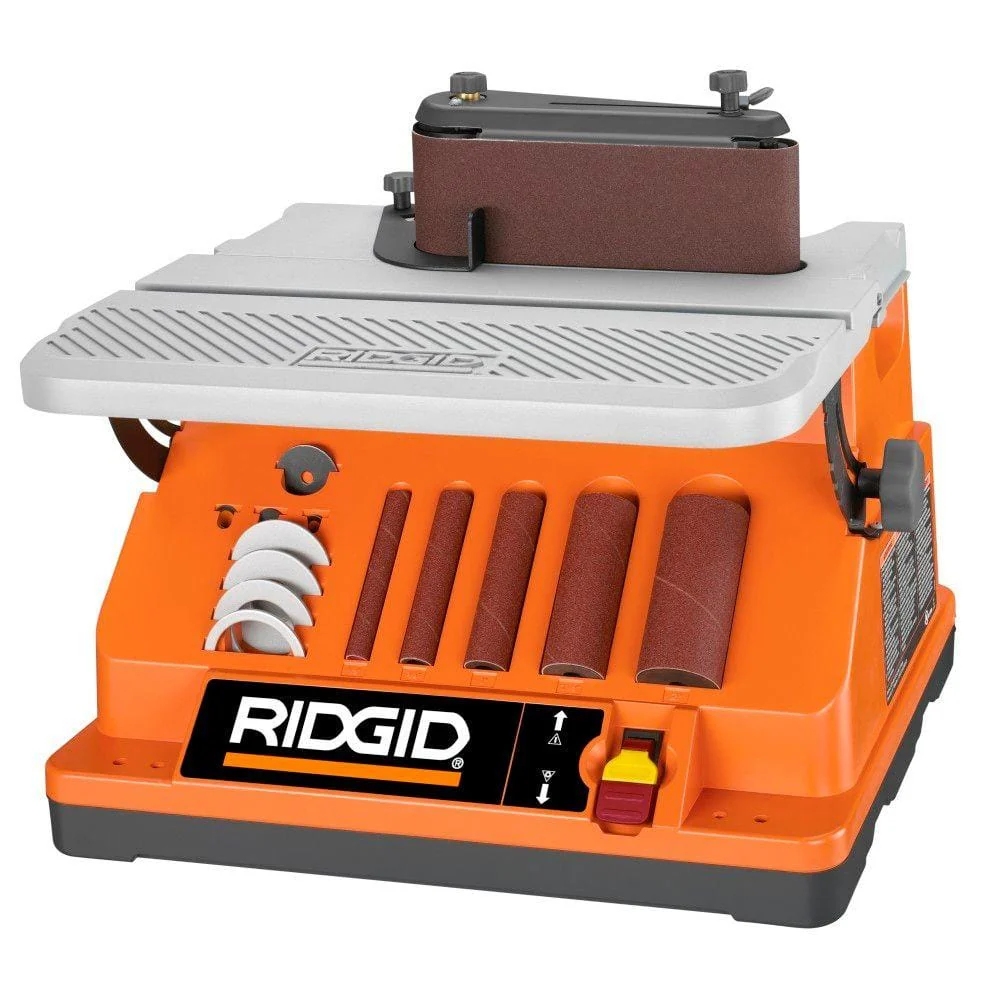
3. The Professional Choice: Ridgid EB4424 (Orange)
The “Orange” Ridgid Spindle Sander is a legend in the woodworking community. It has been a best-seller for nearly 20 years because it is virtually indestructible.
Why it’s perfect for woodworkers:
It features an oversized tilting table, allowing you to sand bevels and compound angles up to $45$ degrees. This is essential for chair makers who need to join curved legs at an angle. The storage for the extra drums and sandpaper sleeves is built into the base, keeping your shop organized.
-
Pros: Tilting table for angles, 5-year warranty, very stable base.
-
Cons: Often priced higher than the WEN or Triton.
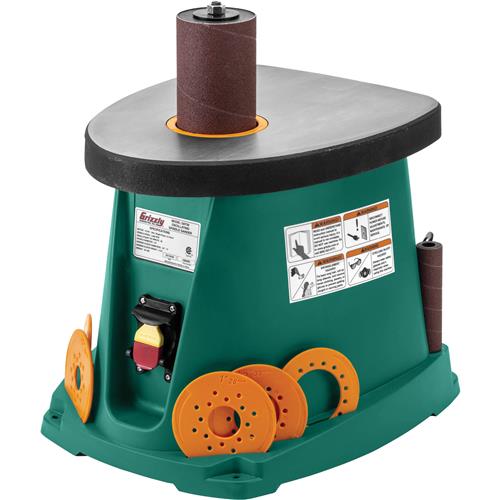
4. The Industrial Standard: Grizzly G0739
If you run a production shop and need a machine that can run for 8 hours a day, the Grizzly is your “workhorse.”
Why it’s essential:
It features a high-quality induction motor that stays cool under heavy load. The cast iron table is precision-ground to be perfectly flat. It’s designed to be bolted down to a heavy workbench, ensuring zero movement while you work.
-
Pros: Very quiet motor, premium fit and finish, industrial-grade switches.
-
Cons: It is heavy and difficult to move in a “mobile” shop.
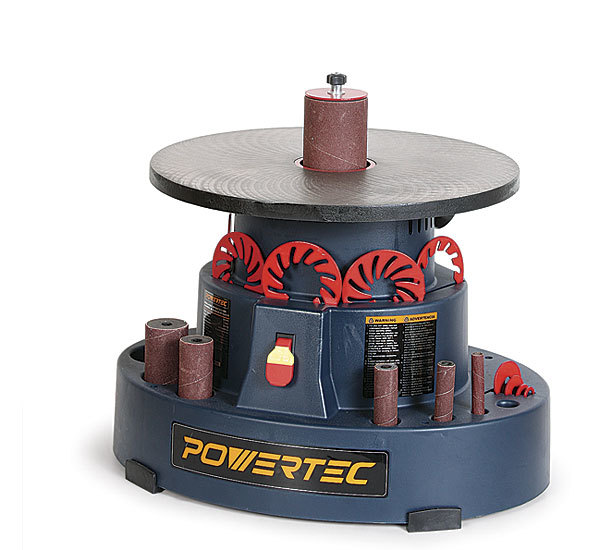
5. Best for Small Projects: POWERTEC OS1000
For the casual crafter who makes wooden toys or signs, the POWERTEC is a lightweight and affordable entry point.
Why it’s perfect for woodworkers:
It is small enough to be tucked away on a shelf when not in use. While it lacks the power for 2-inch thick oak, it excels at sanding plywood and soft pine. It’s the perfect budget-friendly gift for a woodworker starting their first shop.
-
Pros: Lowest price, very portable, simple to operate.
-
Cons: Lower torque (can stall if you press the wood too hard).
3 Tips for Perfect Curve Sanding
-
Don’t Press Too Hard: Let the abrasive do the work. If you push the wood too hard against the drum, you will create a “flat spot” on your curve and possibly burn the wood.
-
Move Against the Rotation: Check the direction of the spindle’s spin. Always feed your wood against the rotation. This gives you more control and prevents the machine from “grabbing” the wood and pulling it out of your hands.
-
Use Dust Extraction: Spindle sanders create a massive amount of fine dust. Always hook up a shop vac to the rear port. This keeps your lungs safe and prevents the sandpaper from “clogging” with dust.
Final Verdict
-
For maximum versatility, the Triton Spindle & Belt Hybrid is the best choice.
-
For heavy-duty production, invest in the Grizzly G0739.
-
For the best balance of price and power, you can’t beat the WEN AT6535.
Read more: Best Wood Jointers for Small Shops: 6-inch vs. 8-inch Models