A high-quality jigsaw is a rite of passage for every woodworker. While many beginners start with a cheap, vibrating model that wanders off the line, a professional-grade jigsaw offers surgical precision. Whether you are cutting a complex “corbel” for a mantelpiece or an intricate wall map, you need a tool with minimal blade deflection and a clear line of sight.
The key to a great jigsaw isn’t just power—it’s control. You want a machine that feels like an extension of your hand. Here are the top 5 jigsaws on Amazon that excel at tight curves and delicate details.
Jigsaw Performance Comparison
| Model | Handle Style | Voltage | Key Feature |
| Bosch Barrel Grip (JSH180) | Barrel Grip | 18V | Maximum control for curves |
| Festool Carvex PS 420 | Barrel Grip | Corded/18V | Triple blade guidance |
| Milwaukee M18 FUEL | D-Handle | 18V | Best-in-class power |
| Makita XVJ03Z LXT | D-Handle | 18V | Lowest vibration |
| BLACK+DECKER SmartSelect | D-Handle | Corded | Best for hobbyist budgets |
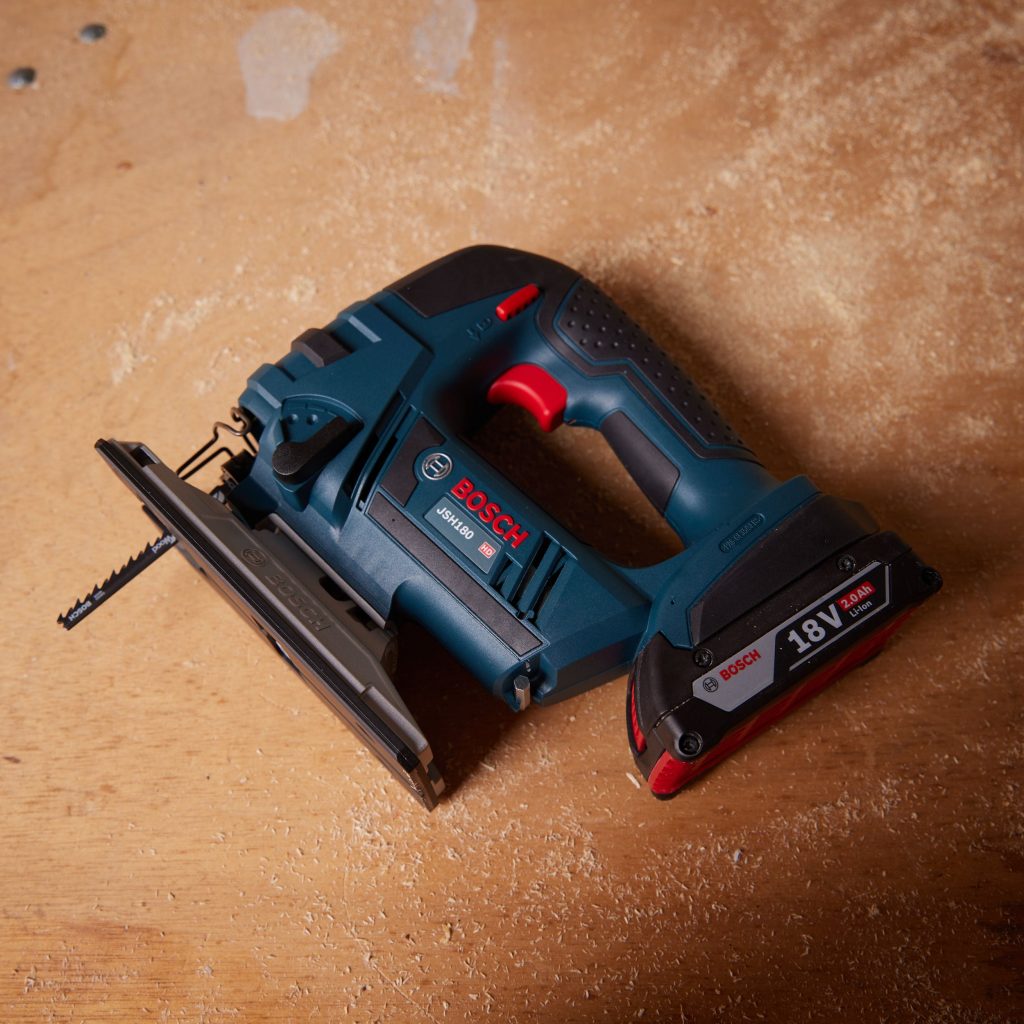
1. Overall Best for Woodworkers: Bosch 18V Barrel Grip (JSH180)
Most woodworkers prefer a Barrel Grip over a traditional D-handle. It allows you to get your hand lower and closer to the wood, which drastically improves your control when following a tight curve.
Why it’s perfect for woodworkers:
Bosch essentially invented the jigsaw, and their blade-change system is the fastest in the industry. It features a 4-stage orbital action, allowing you to choose between a “fast, rough cut” for construction and a “slow, smooth cut” for furniture making.
-
Pros: Superior control, low center of gravity, very clean dust blower.
-
Cons: Barrel grips can be tricky for people with very small hands.
2. The Luxury Standard: Festool Carvex PS 420
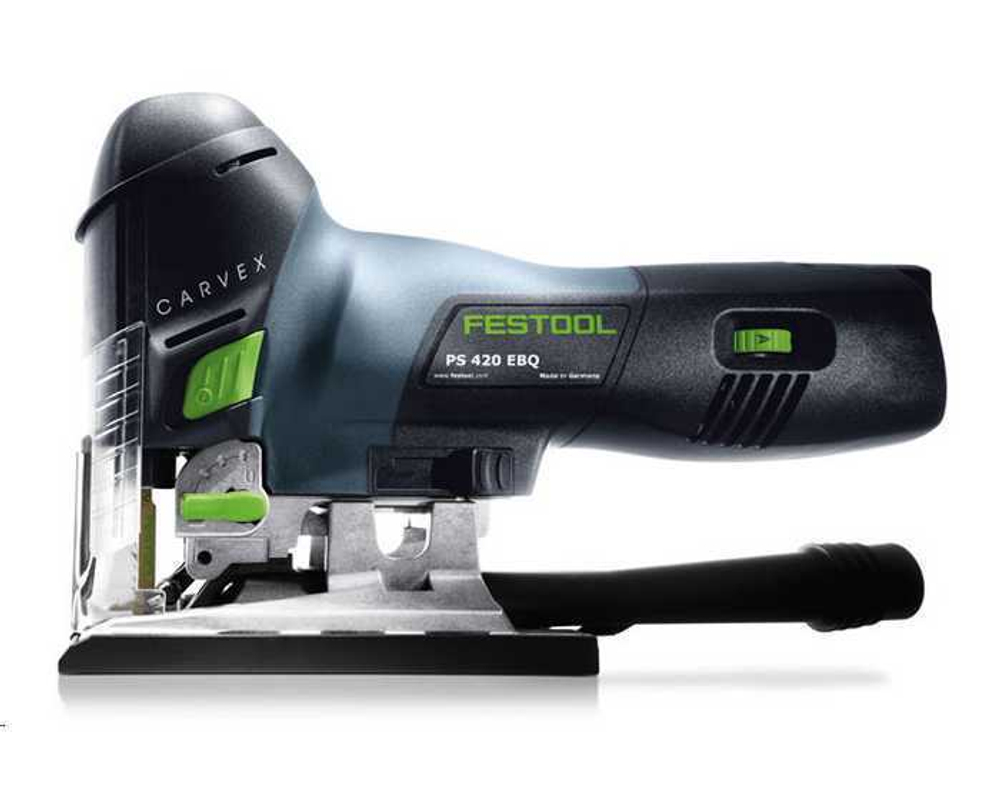
If money is no object and you want absolute precision, the Festool Carvex is in a league of its own.
Why it’s essential:
It uses a unique triple-blade guidance system with adjustable carbide jaws. This means even in 2-inch thick hardwood, your blade won’t bend or “lean” to the side. It also features a stroboscopic light that “freezes” the blade in motion, so you can see your pencil line with zero distractions.
-
Pros: Zero blade deflection, incredible dust extraction, modular base system.
-
Cons: Most expensive option on the market.
3. Best Power & Speed: Milwaukee M18 FUEL D-Handle
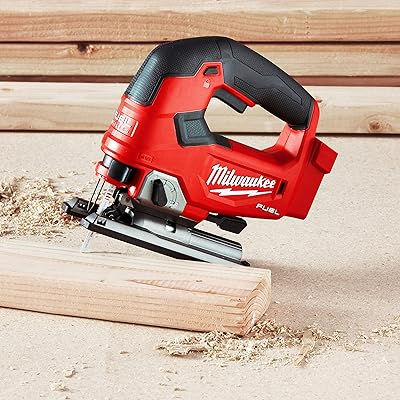
If you do a lot of heavy-duty cutting—like thick bench tops or outdoor structures—the Milwaukee FUEL is a beast.
Why it’s essential:
It features a brushless motor that delivers 3,500 strokes per minute. The D-handle design is classic and comfortable for all-day use. It also has an “Auto-Mode” that starts the blade slowly to help you engage the wood accurately, then ramps up the speed once the cut has begun.
-
Pros: Massive torque, easy-to-use variable speed trigger, built-in LED.
-
Cons: Can be aggressive; requires a steady hand for fine detail.
4. Smoothest Operation: Makita 18V LXT (XVJ03Z)
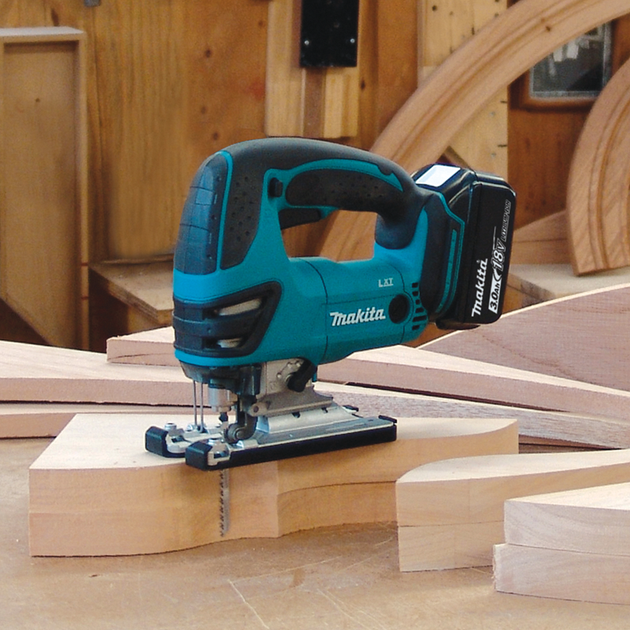
Makita is famous for building tools that don’t vibrate. Vibration is the enemy of precision; if your hand is shaking, your cut will be wavy.
Why it’s perfect for woodworkers:
This saw is incredibly smooth. It feels “refined” in the hand. It’s perfect for cutting oak or walnut where a single slip could ruin an expensive piece of lumber. It also features a heavy-gauge aluminum base that glides smoothly over the wood surface.
-
Pros: Extremely low vibration, reliable tool-less blade change, lightweight.
-
Cons: The dust blower isn’t quite as powerful as the Bosch.
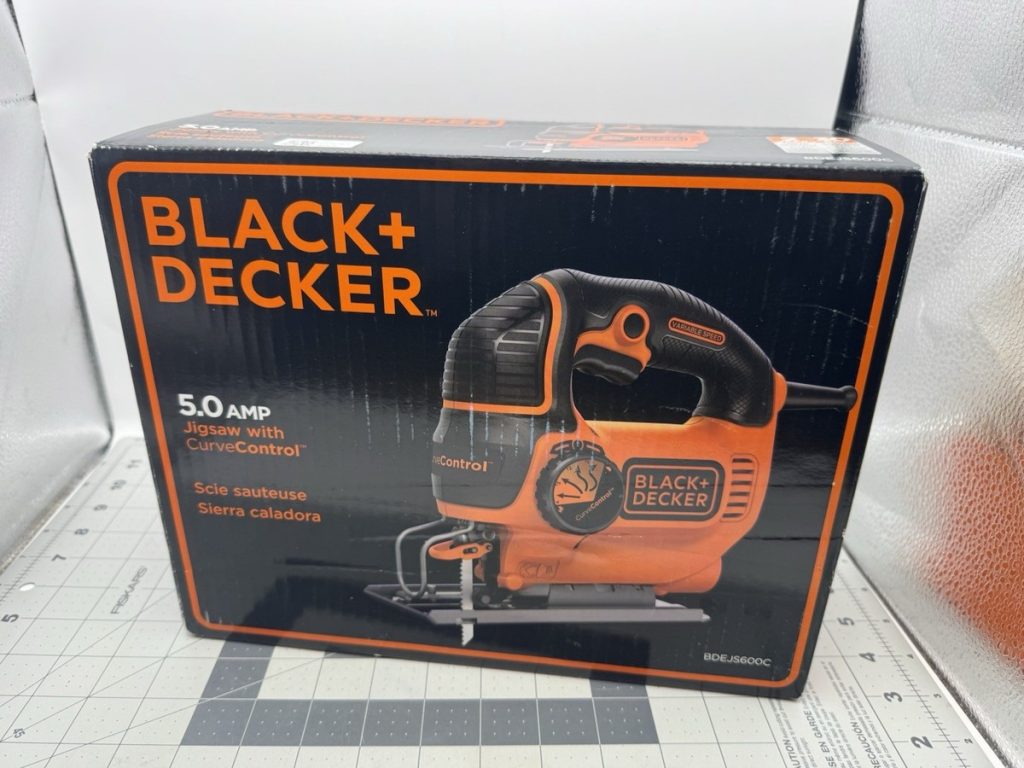
5. Best Budget Choice: BLACK+DECKER BDEJS600C
For the hobbyist who only needs to make occasional curved cuts for DIY garden projects, this corded model is a reliable workhorse.
Why it’s essential:
It features “SmartSelect” technology—you just turn a dial to the type of project you’re doing, and the saw automatically adjusts the orbital setting. For the price of a couple of premium jigsaw blades, you get a very capable tool.
-
Pros: Incredible price, easy for beginners, lightweight.
-
Cons: Corded (limited mobility), more vibration than pro models.
3 Secrets for Perfect Jigsaw Curves
-
Blade Choice is 90% of the Cut: For tight curves, use a Scroll Blade. These are much narrower than standard blades, allowing the saw to turn “on a dime” without binding. Always buy T-Shank Carbide Blades for the best results.
-
Relief Cuts: If you are cutting a very tight “U” or “S” shape, make several straight “relief cuts” from the edge of the wood to your line. This allows the waste wood to fall away in small chunks, giving the blade more room to maneuver.
-
Tape the Line: To prevent “splintering” on the top surface of your wood, apply a piece of blue painter’s tape over your cut line, draw the line on the tape, and cut through it.
Final Verdict
-
For fine furniture and intricate curves, go with the Bosch Barrel Grip.
-
For ultimate precision in a professional shop, invest in the Festool Carvex.
-
For maximum power and versatility, the Milwaukee FUEL is the winner.
Read too: Jobsite vs. Cabinet Table Saws: Which One Do You Need for Your Shop?